
A call to self-sufficiency and self-sustainability
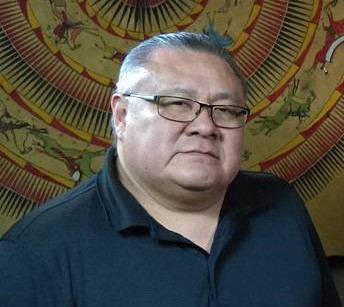
Phil Two Eagle, CEO, Prta Omniciye, Inc.
The Oceti Sakowin Treaty Councils extend this message to the Oyate with urgency and vision: it is time for our people to take solid, collective steps toward true self-sufficiency and self-sustainability. For too long, we have relied on systems that do not serve the best interests of our Nations, and the result has been the loss of our economic independence, our food security, and, in many ways, our sovereignty.
For thousands—if not millions— of years, our people and the nations across Turtle Island lived in a system of self-sufficiency, in harmony with the lands, waters, and relatives who sustained us. Alongside this balance existed systems of trade and currency between tribes, creating vibrant networks of exchange that honored reciprocity and ensured that every people thrived. What was once whole has been fractured by colonization, but it can and must be rebuilt.
The Return of the Tatanka Oyate
One of the first and most vital steps is to bring back our relatives, the Tatanka Oyate (Buffalo Nation), to their rightful homelands. For generations, the bison sustained our ancestors and anchored our way of life. Their near destruction was not only an assault on our food system but on our sovereignty itself.
We call on every reservation of the Oceti Sakowin to establish a bison range proportionate to its population size, using a one-for-one formula:
* If your reservation has 10,000 enrolled members, there should be 10,000 bison on your land.
This is more than symbolism— it is the foundation of food sovereignty. Our people cannot thrive if we remain dependent on outside systems for nourishment. Today, it is estimated that up to 90% of our tribal members rely on food stamps, and most tiwahe (families) shop at stores owned by non-Lakota, sending vital dollars out of our communities. By restoring the bison, we restore our strength, our health, and our independence.
Breaking the Chains of Federal Dependency
We must also speak truth: federal plenary power has become a form of slavery. It has reduced our tribal leadership into waiting on the permission of the “great white father” in Washington, D.C. — approval that will never come.
This dependency has kept us stagnant, always waiting, always asking, always bound to decisions made outside of our Nations. The time has come to break those chains. We must act on our own inherent sovereignty, not on the approval of others. Our ancestors did not wait for permission to live free, and neither should we.
Our Responsibility to Enforce the Treaties
We remind the Oyate that the Oceti Sakowin entered into solemn and binding agreements with the United States — the Fort Laramie Treaties of 1851 and 1868.
* The 1851 Fort Laramie Treaty recognized our vast territories across the Northern Plains, setting boundaries for the Oceti Sakowin and affirming our rights to live as a free people upon them.
* The 1868 Fort Laramie Treaty went further, guaranteeing that the Great Sioux Reservation, including the Black Hills, was set apart “for the absolute and undisturbed use and occupation of the Indians herein named.”
These treaties remain the supreme law of the land under Article VI of the U.S. Constitution. They are not relics of the past — they are living agreements that continue to carry legal and spiritual weight.
We have not only the right but the responsibility to enforce these treaties. Too often they are ignored or violated, but they are not forgotten. Enforcing the treaties is an act of sovereignty, of self-determination, and of responsibility to our ancestors and to future generations.
Food Sovereignty: From Tiwahe to Nation
The Oceti Sakowin Treaty Councils recognize that food sovereignty must begin at home. Each tiwahe (family) can grow its own food and build greenhouses, so that families become the first line of food security. By teaching our youth to cultivate, harvest, and preserve food, and by building community systems that connect those households together, we will ensure that hunger never threatens our people again.
At the national level, we must reclaim our right to feed ourselves. Recent reports show that SNAP and EBT benefits have been delayed or frozen in tribal jurisdictions and states due to federal shutdowns and administrative breakdowns. In Wisconsin, the Menominee Indian Tribe publicly announced SNAP delays and urged members to rely on tribal food programs. In Minnesota, tribal nations were told they could not approve new SNAP applications during the shutdown. These disruptions prove what we already know: we cannot rely on outside systems to feed our people.
Returning to Our Ancient Ways of Economy
We are not talking about creating a new economy. We are talking about returning to the ancient ways of doing business—the ways our ancestors practiced through trade, reciprocity, and shared prosperity across Turtle Island. Our traditional systems of trade and currency were rooted in relationships, responsibility, and respect, and they carried us for countless generations.
At the same time, we must continue to adapt to the present just as our ancestors did before us. When the shúŋkawakȟaŋ (the horse) came into our lives, our people embraced this new relative and transformed it into a source of strength and mobility. In that same spirit, we must now adopt and master new technologies— digital tools, financial systems, and innovations—that will allow us to carry our traditional economy into the modern world without losing who we are.
This means not only chartering tribally controlled financial infrastructures, but also creating our own supply chains and distribution systems. From food to energy to goods, we must ensure that what we produce for ourselves can be stored, transported, and delivered by systems we own and control. By building these networks, we end the cycle of dependency and restore sovereignty to every aspect of our daily lives.
A Path Forward
This is not a dream; it is a responsibility.
Self-sufficiency and self-sustainability are not optional— they are the very essence of sovereignty. Our ancestors signed treaties so that future generations of the Oyate would remain strong and free.
Now, it falls to us to honor their vision. By bringing back the Tatanka Oyate, by reclaiming our food systems, by enforcing our treaties and the rights of absolute and undisturbed use and occupation, by empowering each tiwahe to grow food and build greenhouses, by returning to our traditional systems of trade, and by creating our own financial, supply chain, and distribution systems—while adapting to modern tools as our ancestors once did with the horse—we take the first steps toward an unshakable future.
We must no longer wait for permission from colonial governments. We must move forward as sovereign Nations, guided by the wisdom of our ancestors and the strength of our people.
We ask each tiyospaye, each reservation, and each tribal leader to answer this call with action. Together, as the Oceti Sakowin, we can restore balance and ensure that the Oyate will always remain self-sustaining, self-sufficient, and sovereign.
Issued by the Oceti Sakowin Treaty Councils
Mitakuye Oyasin – We Are All Related
For more information contact: Phil Two Eagle, CEO, Prta Omniciye, Inc. phil.twoeagle@petaomiciye.org
The post A call to self-sufficiency and self-sustainability first appeared on Native Sun News Today.
 Shared by: Native Sun News Today
October 24, 2025
Shared by: Native Sun News Today
October 24, 2025