
The Last Hunt, Saving the Pte Oyáte
By the time the last buffalo hunt was recorded, the prairie had settled into a quiet that felt emptied of the life that once moved through it. The great buffalo herds that once thundered across the Plains, rolling like dark rivers over the grass, had thinned to scattered shadows. Their absence was a wound. Even the meadowlarks seemed to know it. Their songs, once braided easily with the hoofbeats of the buffalo, now hung in the air with a kind of loneliness, as if they, too, recognized that the world beneath their wings was no longer one shaped by the Pte Oyáte (Buffalo Nation).
For the Lakota, the disappearance of the Pte Oyáte was not simply the loss of an animal. It was the unraveling of a way of life. The buffalo had fed them, clothed them, sheltered them, taught them. Every part of the animal had a purpose, a spirit, a place in the circle. To lose the buffalo was to lose a rhythm the people had lived by for millennia.
Missionary Stephen Return Riggs wrote about that final hunt, describing riders who followed the last animals with a solemnity that felt less like pursuit and more like ceremony. There was no victory in it. Only recognition. The people understood they were witnessing the end of an era, a moment when the old world slipped away and a new, unchosen one pressed in around them.

Good Elk Woman and Children
On the Cheyenne River, a Lakota woman named He.áka Wašté Wi.ya., Good Elk Woman, felt that shift in her bones. She watched the land change, watched the buffalo disappear, watched the silence grow. And she refused to accept it.
One morning in the early 1880s, she stood outside the Dupris homestead near Cherry Creek as her husband, Frederick Dupris, and their sons prepared for what they believed would be an ordinary hunt. Good Elk Woman stepped forward, her voice steady with purpose.
“Bring back what is left,” she told them. “If we do nothing, the buffalo will be gone forever.”
Those words carried the weight of a vow.
The family rode north toward the Grand River country, where rumors whispered that a few buffalo still survived. The wind was sharp, the land wide and empty. He.áka Wašté Wi.ya. rode with her sons for the first miles, her shawl pulled tight, her eyes fixed on the horizon. She was not riding for sport. She was riding for the future.
In the breaks of the Grand River, they found what she had prayed for: orphaned calves, small and frightened, left behind after the last desperate hunts. The boys moved slowly, speaking softly, guiding the calves toward the wagon. Frederick lifted each one with care, as if handling the last threads of a sacred world.
They brought the calves home. They fed them, protected them, and watched them grow. Over the years, those five calves multiplied into a herd of fifty-seven, one of the last surviving buffalo families on the Northern Plains.
It was a fragile miracle, born from a Lakota woman’s insistence that relatives must be protected.
When Frederick Dupris died, the herd passed through the family. Word of the surviving buffalo reached a rancher named James “Scotty” Philip, already known for his respect for the animal. But it was his wife, Sarah Larabee, a Native woman from the Fort Robinson region, who urged him to act.
She reminded him that the buffalo were more than animals; they were a people’s history, a people’s memory, a people’s relative. She told him that if he had the means to save them, he had the responsibility.
Philip listened.
In 1899, he purchased the Dupris herd, the descendants of Good Elk Woman’s rescued calves, and expanded it with fierce dedication. Under his care, the herd grew to nearly 1,000 head, the largest in the world at that time. Visitors said the ground shook again, just a little, when the buffalo ran.
From that herd came the animals that repopulated Custer State Park, tribal herds, and ranches across South Dakota. The buffalo that tourists photograph today, the ones that stand silhouetted against the Black Hills at dusk, carry the bloodline of those five calves lifted into a wagon by the Dupris family.
And so the story loops back to the beginning: The last buffalo hunt marked the end of an era. Good Elk Woman’s rescue marked a beginning. The Philip herd carried the species into the next century. And Custer State Park carried them into the next.
The Pte Oyáte survived because He.áka Wašté Wi.ya. refused to let them vanish.
The Stamp
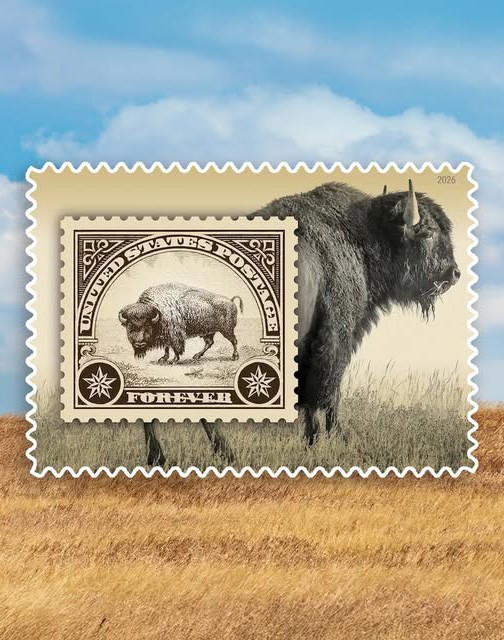
Today, as the United States Postal Service releases its new Buffalo postage stamp, the image carries more than artwork. It carries the memory of the last hunt, the courage of He.áka Wašté Wi.ya., Good Elk Woman, the determination of Frederick Dupris and their sons, the stewardship of Scotty Philip and Sarah Larabee, and the long journey of a sacred relative who survived extinction.
Descendancy
The Dupris buffalo rescue story continues in the living descendants of that family. Good Elk Woman and Frederick Dupris were the ancestors of Douglas Dupris, who married Mable Poor Buffalo Dupris. Their daughter, Aurelia Dupris Rave, passed the story to her daughter Andrea Marie Rave, and onward to her daughter Ernestine Anunkasan Hopa, who carries this history to you today.
(Contact Ernestine Anunkasan Hopa at editor@nativesunnews.today)
The post The Last Hunt, Saving the Pte Oyáte first appeared on Native Sun News Today.
 Shared by: Native Sun News Today
May 2, 2026
Shared by: Native Sun News Today
May 2, 2026
Tags: Top News