Remembering Tim Giago
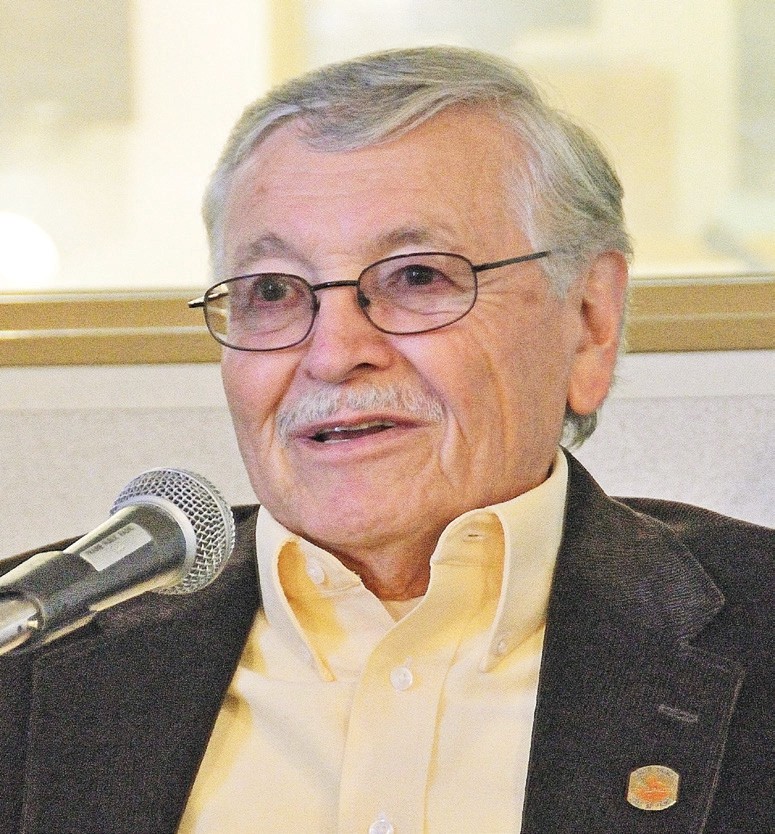
Tim Giago
RAPID CITY – Long before founding Native Sun News Today, Tim Giago had built a journalism career shaped by early influences, national experience and a determination to elevate Native voices in the press. An Oglala Lakota journalist known by his Lakota name Nanwíca K’ciji, He Stands Up for Them, Giago was widely recognized for reshaping Indigenous media nationwide through his newspapers, books and advocacy.
Born on the Pine Ridge Reservation in 1934, he attended Holy Rosary Mission Boarding School, experiences that later informed his writing about trauma, cultural suppression and the long shadow of federal Indian policy. He spent more than four decades creating and leading Native publications, mentoring young reporters and championing sovereignty and truth telling in journalism. His path began in the late 1960s and early 1970s, when he lived in California and entered his first newsroom, forming the foundation of a career defined by the belief that Native people must tell their own stories.
Giago often said his earliest exposure to Native journalism came during his years in San Diego, where he worked for Smoke Signals, a Native focused newspaper published by Al and Bea Mertens. The Mertens encouraged his writing and gave him the opportunity to develop his reporting skills, offering him his first professional newsroom experience. Working at Smoke Signals showed Giago that Indigenous stories could be written, published and shared at a time when Native voices were largely absent from mainstream media. The experience shaped his conviction that Native issues needed Native reporters and gave him the confidence to eventually build a newspaper of his own.
After returning to South Dakota, Giago began writing columns for the Rapid City Journal. His commentary addressed racism, tribal politics and life on Pine Ridge with a directness that drew both praise and criticism. His voice was unapologetically Lakota, challenging state and federal systems while insisting on dignity for Native people. His columns became a platform for confronting hard truths and demanding accountability from institutions that had long ignored or misrepresented Indigenous communities.
In 1981, Giago launched the Lakota Times in Pine Ridge Village. The newspaper was Lakota owned and Lakota run, operating independently of tribal government and outside political influence. Giago built a newsroom that reported on reservation life with depth and accuracy, covering elections, land issues, education and community concerns. The Lakota Times became a model for Indigenous journalism rooted in sovereignty and self representation, proving that Native communities could sustain their own press and define their own narratives.
Giago expanded his reach in 1992 by founding Indian Country Today, a national newspaper that connected Native nations across the United States. The publication grew into one of the most widely read Indigenous news sources in the country, carrying stories from tribal communities into national conversations and establishing a new standard for Native journalism. He later founded the Lakota Journal and ultimately Native Sun News Today, continuing his mission to build strong, independent Native media.
Alongside his newspapers, Giago authored several books, including Children Left Behind, his memoir of boarding school trauma; Notes from Indian Country, a collection of his nationally syndicated columns; and Notes from a Crazy Indian, essays on reservation life, politics and identity. His writing blended critique with cultural grounding, always returning to the central idea that Native people must speak for themselves.
Giago’s work earned national recognition and helped shape the future of Indigenous journalism. He founded the Native American Journalists Association (NAJA) in 1983, creating a national organization dedicated to protecting press freedom and supporting Native reporters. He was selected as a Nieman Fellow at Harvard University, one of journalism’s highest academic honors, and was inducted into the South Dakota Newspaper Hall of Fame, the South Dakota Hall of Fame, and the Native American Hall of Fame, each recognizing his profound impact on journalism, education and public understanding.
One of Giago’s proudest accomplishments came in 1990, when he worked closely with South Dakota Gov. George Mickelson during the state’s Year of Reconciliation. Giago used his platform to push for honest dialogue about racism, historical trauma and the need for better relationships between Native and non Native communities. His advocacy played a central role in persuading Mickelson to replace Columbus Day with Native American Day, making South Dakota the first state in the nation to formally honor Indigenous people with a statewide holiday. Giago viewed the change as a landmark moment, not only for Lakota people, but for all Native nations whose histories had long been overshadowed.
Throughout his life, Giago wrote with an unwavering commitment to truth, sovereignty and the protection of Native voices. His columns confronted injustice, yet he always carried a deep respect for Lakota families, culture and community. He spent more than four decades building newsrooms where Native reporters could grow, where tribal issues were covered with accuracy and respect, and where Indigenous people could speak for themselves. His Lakota name, Nanwíca K’ciji, reflected not only his work, but the way he lived his life.
He continued writing until his final years, guiding Native Sun News Today with the same clarity and conviction that marked his earliest columns. His legacy endures in every Native journalist who follows the path he helped clear, and in every community that finds its voice through Indigenous storytelling.
Tim Giago was born on July 12, 1934, and died on July 24, 2022, closing a life devoted to lifting Native voices and strengthening the future of Indigenous journalism.
(Contact Ernestine Anunkasan Hopa at editor@nativesunnews.today)
The post Remembering Tim Giago first appeared on Native Sun News Today.
 Shared by: Native Sun News Today
July 21, 2026
Shared by: Native Sun News Today
July 21, 2026
Tags: More News