
Bears Ears faces new tribal role and land protection fight
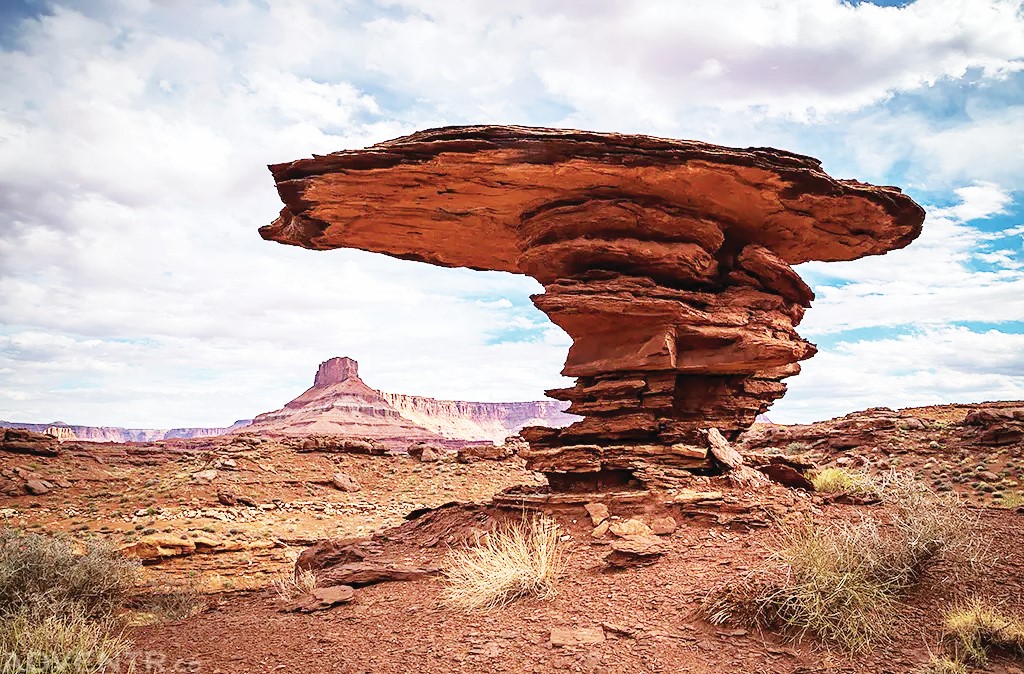
Bears Ears National Monument (Photo courtesy of Adventr.co)
WASHINGTON—Five tribal nations spent years working to secure a place in the management of their ancestral homelands at Bears Ears. Now, with most of the monument removed from its protected boundaries and their commission terminated, the management plan they helped develop faces a separate challenge in Congress.
Sen. Mike Lee, R-Utah, has entered a Government Accountability Office (GAO) opinion into the Congressional Record, moving toward an effort to overturn the Bears Ears resource management plan through the Congressional Review Act, according to a September 17 statement from conservation organizations.
That action does not itself repeal the plan. It prepares the way for a resolution of disapproval, which would require passage by both houses of Congress and the president’s signature to become law.
The distinction matters. President Donald Trump has already changed the monument’s boundaries. Lee’s effort targets the rules governing how the land is managed.
In July, Trump reduced Bears Ears from approximately 1.36 million acres to 121,096 acres, a reduction of about 91 percent. His proclamation also terminated the Bears Ears Commission, which represented the Hopi Tribe, Navajo Nation, Ute Mountain Ute Tribe, Ute Indian Tribe of the Uintah and Ouray Reservation, and Pueblo of Zuni.
Those five nations formed the Bears Ears Inter-Tribal Coalition in 2015. Their connection to the southeastern Utah landscape extends far beyond the establishment of the United States. The twin buttes that give the monument its name are known as Bears Ears in each of their Native languages.
For the coalition, this is a living homeland, containing sacred places, ancestral dwellings, burial sites, medicines and continuing ceremonial relationships. Its protection proposal treated those connections as part of an entire landscape.
President Barack Obama established the monument in December 2016, protecting approximately 1.35 million acres. Trump reduced it by about 85 percent in 2017. President Joe Biden restored the excluded lands in 2021 while retaining acreage Trump had added.
Federal agencies approved the latest management plan in January 2025, following collaboration with the tribal commission. The plan brought Traditional Indigenous Knowledge into a process otherwise directed by federal land agencies.
Trump’s July proclamation ended that commission’s designated role but retained consultation requirements under other applicable authorities. It also specified an advisory committee with five tribal representatives, four municipal or county representatives, and six members recommended by Utah’s governor. Consultation remains. The separate commission through which the five nations helped shape management does not.
The administration argues the larger monument exceeded the Antiquities Act’s requirement that reserved acreage be confined to the smallest area compatible with protecting designated objects. Trump’s proclamation maintains that many resources already receive protection under other federal laws and that some features are too common across the region to justify monument protection. It also identifies mineral development as a national priority, citing domestic supplies, jobs and reduced dependence on foreign sources. Listed resources include uranium, vanadium, copper and other minerals.
Supporters of the reductions contend federal ownership and existing protections continue, while fewer restrictions permit greater access and economic activity. Garfield County Commissioner Leland Pollock told ABC4 that federal authorities could still prosecute archaeological vandalism outside monument boundaries.
That continuing authority is different from retaining all the restrictions associated with monument status. Trump’s proclamation reopened excluded lands to new mining claims September 11, subject to applicable laws and existing withdrawals.
Sixteen claims were recorded that day, according to records obtained by the Southern Utah Wilderness Alliance. Three were filed by Moab guide George Schultz and 13 by Kimmerle Mining, including adjustments associated with its Easy Peasy mine. Mining claims report
A mining claim is not an operating mine. Schultz cautioned that geology and profitability determine whether development proceeds. Nevertheless, conservation groups say even small operations can disturb cultural resources and leave pollution behind.
The next dispute concerns whether Congress can discard the management framework itself.
GAO concluded that the Bears Ears plan qualifies as a rule subject to Congressional Review Act submission requirements. Its opinion addresses the plan’s legal classification, not whether its protections are desirable or whether Trump’s boundary reduction was lawful. GAO opinion
If a disapproval resolution becomes law, the act generally bars reissuing a rule in substantially the same form without subsequent congressional authorization. Opponents therefore see consequences extending beyond the current administration: restoring comparable management provisions could become more difficult even after another change in presidents.
“This plan, developed through years of public input and collaboration with Tribes, provides essential guidelines on activities that can occur in the monument,” Earthjustice attorney Thomas Delehanty said in the conservation groups’ statement.
Steve Bloch, legal director for the Southern Utah Wilderness Alliance, said the plan established protections for cultural resources, wildlife and the landscape that would be placed at risk by its repeal.
The coalition’s standing also differs from that of an outside advocacy organization. Each participating tribal government appoints its own delegate, and the coalition operates under authority and limits established by the five tribal councils.
The monument designation did not transfer ownership of the federal lands to the tribes. What it offered was a specific protection framework and a formal channel for direct tribal participation, both of which have now become subjects of renewed federal political debate.
Federal agencies retain management authority, but the tribes sought a sustained role reflecting their status as sovereign governments and their continuing relationship with the land.
Conservation organizations have challenged the monument reductions in federal court, disputing Trump’s authority under the Antiquities Act. The administration asserts that authority in its proclamation. Those competing positions should not be confused with a final judicial resolution.
For now, the boundary reduction, mining claims and proposed congressional action are separate developments with overlapping consequences. Together, they put both the extent of protection and the tribes’ role in shaping it at issue once again.
(James Giago Davies is an enrolled member of OST. Contact him at skindiesel@msn.com)
The post Bears Ears faces new tribal role and land protection fight first appeared on Native Sun News Today.
 Shared by: Native Sun News Today
September 25, 2026
Shared by: Native Sun News Today
September 25, 2026
Tags: News