
Documenting the stories we leave behind
 Article courtesy of West River Eagle
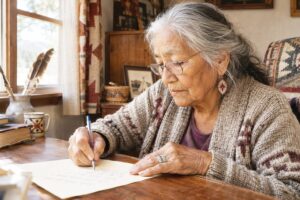
November is National Life Writing Month, an opportunity to reflect on our lives and document the experiences that shaped us. It is also a reminder that history is not only found in textbooks, historical records, or the stories of well-known individuals. History lives in families, communities, and the people who have experienced generations of change.
Every person has a story. Some personal stories are filled with accomplishments and happy memories. Other life stories include hardship, loss, difficult decisions, and painful lessons learned along the way. Many such stories contain a combination of these elements.
Regardless of how our lives have unfolded, those experiences contribute to who we become.
As Indigenous people, documenting our stories carries a deeper significance. Much of our history has been recorded through the perspectives of outsiders, researchers, government agencies, and institutions. While those records may contain historical information, they do not always reflect how our ancestors experienced events or how those experiences affected our families and communities.
Our own voices provide another perspective, one that includes the memories, knowledge, and lived experiences of the people who were there.
In Lakota communities, our understanding of family extends beyond the immediate household. The concept of tióšpaye reflects our extended family relationships, kinship responsibilities, and connections to one another. Our histories are intertwined through these relationships. The stories of our grandparents, aunties, uncles, cousins, and elders help us understand our family identities and our place within the larger oyáte, or people.
For generations, Lakota knowledge has been passed down through oral traditions. Elders shared teachings about relationships, respect, responsibility, the land, and how to live in connection with others. Place names, family histories, language, and traditional knowledge carry meanings that cannot always be captured in written historical accounts.
There are also difficult chapters that deserve to be documented. The experiences of boarding schools, government policies, land dispossession, language suppression, relocation, and the disruption of family relationships have affected generations of Indigenous families. These histories are not simply events from the past. Their effects can still be seen in our families and communities today.
Yet our stories are not limited to historical trauma. We must also document our resilience, cultural continuity, humor, accomplishments, community leadership, family traditions, and the ways our people continue to adapt while maintaining their identities.
As someone who has worked in behavioral health, recovery from trauma and/or addiction, and community advocacy, I have learned that one chapter of a people’s history cannot measure or define their entire lives. A person’s circumstances, mistakes, or struggles do not tell the whole story. There is often much more beneath the surface than what others see from a distance.
Writing about our experiences can help us recognize our own growth. It can also give future generations a fuller understanding of the circumstances their families faced and the changes they helped create.
Life writing does not have to be complicated. Start with a memory. Describe the home you grew up in, the relatives who influenced you, the language you heard growing up, the community gatherings you remember, or a teaching that has stayed with you throughout your life. Write about what it was like growing up in your community and how you have witnessed it change.
Consider documenting the stories of elders while they are still here to share them. Ask about family connections, traditional names, historical events, childhood experiences, and the teachings they want younger generations to carry forward. These conversations can become priceless family records.
Not every experience needs to be shared publicly. Some knowledge is personal, family-specific, or culturally protected. Indigenous people should have the right to determine how our stories and knowledge are documented, preserved, and shared.
We also need to make room for stories that are not always represented in our community histories. The experiences of our elders, parents, young people, veterans, survivors, recovering individuals, educators, and everyday community members deserve recognition. Each generation has witnessed changes that the next generation may never fully understand without hearing directly from those who lived through them.
As we observe National Life Writing Month, I encourage people to take time to document their lives. Do not wait until you have the perfect words or until you believe your story is important enough to write down.
Our ancestors left us teachings, memories, and cultural knowledge that continue to shape who we are. We have a responsibility to consider what we are leaving behind for the generations who will follow.
The post Documenting the stories we leave behind first appeared on Native Sun News Today.
 Shared by: Native Sun News Today
November 22, 2026
Tags: More News