
Bringing Native dances to the Macy’s Thanksgiving Day Parade
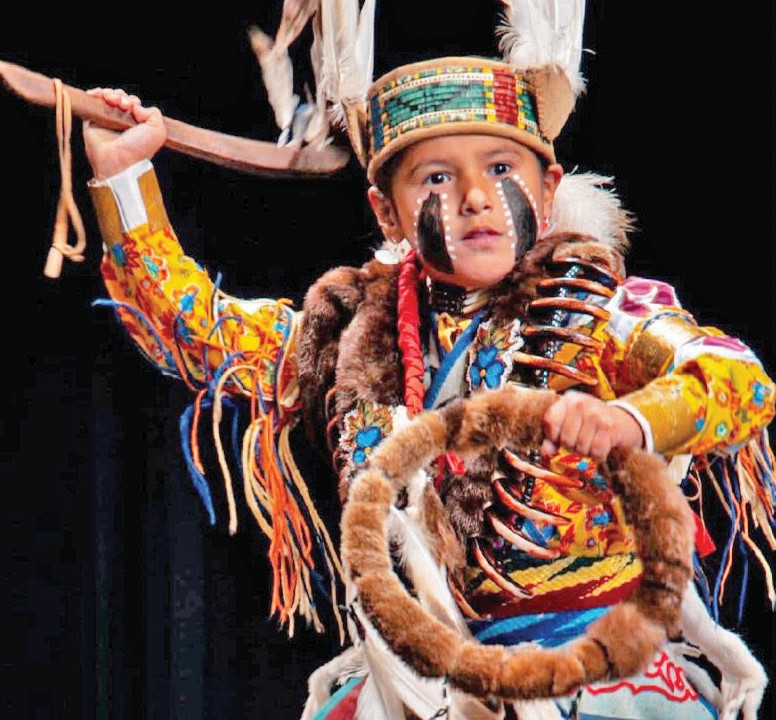
Top photo: Wambli Dolezal, Winnebago, dances men’s traditional. Dolezal will dance at the Macy’s Thanksgiving Parade on November 27, 2025, in New York City. (Photo courtesy of Cassie Kitcheyan).
Federal policies made it illegal for a Native person to dance in public 91 years ago.
However, in 2025 a group of nine Indigenous dancers from across the United States and Canada are preparing to take the stage at the world-renowned Macy’s Thanksgiving Day Parade in New York City.
“We wanted to really showcase our culture and let the world know that we still exist, that we’re not in museums or history books, or are something that you read about in the past,” said Larry Yazzie, Meskwaki and the founder and executive director of Native Pride Productions. “I really wanted to show the world that we are, we’re alive and well, and our culture is passed down to our younger generations.”
Communities represented by dancers in the group include the Eastern Shoshone tribe, the Red Lake Ojibwe Nation, Red Pheasant Cree First Nation, Animakee Wa Zhing #37 First Nation, the Meskwaki Nation of Iowa and Winnebago Tribe of Nebraska.
The Macy’s parade, which will celebrate its 99th anniversary this year, is viewed on the ground by up to 3 million people with an additional 31 million tuning in on TV and streaming platforms.
This year will be the third time Native Pride Productions, a Native media and production company based in Jacksonville, Florida, has taken the stage at the parade. Their last appearance was in 2013.
“Anytime we get a call like this, it’s a big honor,” Yazzie said. “I really wanted to share it with our youth and other dancers who really never had the opportunity to be on the big stage, and because the selected dancers I chose are the ones that I really look up to and respected, and they work so hard for their families, and they’re representing the communities very well.”
From 1883 to 1933, it was illegal for Native people to dance in public following the passage of the Code of Indian Offenses. The government’s ban on Native ceremonies and cultural dances was part of a larger effort to assimilate Native people into mainstream culture.
But it failed. Native people retained many cultural practices and traditional dance forms.
While the law was mostly focused on preventing cultural and spiritual dances, it included broad sweeping measures to prevent any Native dancing. Dances went underground during that time, sometimes breaking free to be showcased as “patriotic” celebrations on holidays like the Fourth of July or Veteran homecomings.
Now, almost a century later, Native dances can and will be celebrated on one of the largest stages in America.
Three generations of dancers will be featured in the performance on Thursday morning, Yazzie said.
Yazzie himself is the oldest at 58, representing the elders, he said. One of the youngest dancers Wambli Dolezal, also known as Baby Wam, is a seven-year-old Winnebago boy who caught Indian Country’s attention at the Black Hills Powwow when he and fellow woodland dancer, Opie Day-Bedeau, stole the show in the annual grand entry dance competition.
The two woodland dancers linked arms, spinning around with their wooden clubs held high. It was a breathtaking moment, said Dolezal’s mother Cassie Kitcheyan, a citizen of the Winnebago Tribe of Nebraska.
Woodland traditional is a style of dance specific to the eastern woodland regions of the United States and Canada and is a style danced by tribes like the Menominee, Ho- Chunk, Ojibwe, Meskwaki, Potawatomi and many more.
Woodland traditional regalia often features floral beadwork or applique usually over black velveteen. Both men and women who dance woodland traditional often depict stories of battle or scenes from nature in their dances. Men will often tell the story of a battle using items like wooden clubs while woodland women will move gracefully around the arena occasionally mimicking rowing in a canoe, bow hunting or picking berries during honor beats.
Depending on the region, women woodland often dance scrub style. It is a dance where women wearing vibrant satin applique skirts softly hop around the arena on the balls of their feet with their arms moving up and down in a scrubbing motion.
Woodland styles, particularly the woodland strap dress, saw a large resurgence in 2025.
“It was just so awesome to see woodland on that stage,” Kitcheyan said. “Woodland tribes, woodland dancing highlighted at a Powwow like Black Hills – that was my favorite part.”
Dolezal, a citizen of the Winnebago (Ho-Chunk) Tribe of Nebraska and of Dakota, Lakota and Apache descent, caught Yazzie’s attention in May at the Meskwaki Nation’s Graduation Powwow in Iowa.
Dolezal jumped in on a men’s woodland special, and the Winnebago kid breezed through the arena. Yazzie, who frequently emcee’s for the Meskwaki powwow’s, said he knew then and there he wanted the second grader to be part of the Macy’s Parade team this fall.
“I think he brings a light to the circle, to our people,” Kitcheyan said.
The post Bringing Native dances to the Macy’s Thanksgiving Day Parade first appeared on Native Sun News Today.
 Shared by: Native Sun News Today
December 2, 2025
Shared by: Native Sun News Today
December 2, 2025
Tags: More News