
Eagle Butte Native now Executive Director of SD Urban Indian Health Board
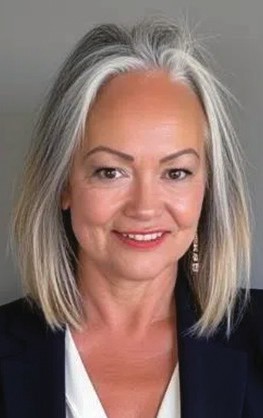
Colette Keith
SIOUX FALLS – Colette Keith, Cheyenne River Lakota, has been appointed Executive Director of the South Dakota Urban Indian Health (SDUIH) Board, a non-profit urban Indian healthcare provider funded through a contract with Indian Health Service (IHS). SDUIH operates two full-time medical/ behavioral health clinics in South Dakota, one located in Pierre and one located in Sioux Falls.
Founded in 1977, the mission of SDUIH is to promote equitable care of the mind, body, and spirit for all relatives through collective healing and holistic wellness, grounded in Indigenous values.
Keith says she is honored to be joining the organization and is looking forward to bringing increased visibility and stability to SDUIH. Among the reasons she gives for her interest in working for the organization are that they approach their work with the best practices of trauma informed care in mind and they refer to the clients/patients they serve as “relatives.”
She noted that 70% of tribal members in South Dakota reside off the reservations and are unable to access Indian Health Service clinics and programs. “Anyone who would like to visit and tour either the Pierre or Sioux Falls clinics are welcome,” she said.
The Sioux Falls clinic is located at 1200 N. West Ave., Sioux Falls, SD, phone (605) 339-0420. The Pierre Clinic is located at 339 S. Pierre St., Pierre SD, phone (605) 224-8841.
Though born in Eagle Butte and a member of the first Head Start Class in Eagle Butte, Keith was reared mostly off the reservation. She graduated from high school in St. Louis, Missouri, and attended Washington University in St. Louis, MO.
She moved back to Cheyenne River and married a member of the Cheyenne River Sioux Tribe. Her two daughters are enrolled members. She graduated from the University of North Dakota with a degree in communication and broadcast journalism and worked in radio and television news.
She did graduate work at the University of Nebraska Medical Center (UMC) at the School of Public Health and has since worked in Tribal Colleges and Universities for fifteen years.
She currently lives in White River, SD, with her husband Gavin, 12 chickens, and dog and a cat. She commutes to SDUIH ambulatory clinics in Pierre and Sioux Falls.
Keith’s personal vision for SDUIH is to serve all relatives, both tribal and non-tribal people, in Pierre and Sioux Falls. With her expertise in communications, she plans to increase the visibility of SDUIH both locally and state-wide and increase the numbers of relatives being served.
Keith is 100% in agreement with the holistic health-care philosophy of caring for the body, mind, and spirit of relatives who come to SDUIH for care.
The clinics’ Cultural Health Department offers traditional medicines (pezuta, bear root tea, herb infused honey), spiritual guidance, smudging, and a warm and welcome space for relatives to come and talk. The also offer cultural activities throughout the week to take care of the relatives’ spirit and help keep relatives connected to traditional Indigenous lifeways. The doors are always open for relatives needing to pray, sing, smudge or just talk.
Red Road Talking Circles are rooted in Native American traditions and offer a place for individuals to connect with themselves and others through dialogue and storytelling. All are welcome to join this safe space to share their thoughts, feelings, and experiences of recovery.
Wellbriety is a 12-Step meeting and recovery program developed by White Bison. Rooted in the teachings of Medicine Wheel, The Cycle of Life, and the Four Laws of Changes, this group is open to everyone.
Additional Cultural Services include Positive Indian Parenting, Traditional Beading and Sewing groups, Asniyapi Ospaye (Healing Family) groups, Inipi (in Pierre) and Cultural Competency and other Cultural-related Trainings.
Keith’s plans for SDUIHB also include expanding conversations and raising awareness about the effect of trauma on the health of relatives. She commented, “If anyone asks me, ‘What is it that is ailing Native people,” my answer is ‘intergenerational trauma.’”
She stated firmly, “Every human being has intergenerational trauma, unresolved sadness passed down from generations to generations. That’s why we must erase stigma and make mental health care as acceptable as physical health care.”
Keith’s father, Arnie Schneider, was of German descent. Her mother was Carlene Swan, Cheyenne River Lakota. Keith says there is just as much intergenerational trauma in her father’s German heritage as in her mother’s Lakota heritage.
When asked about operating in the current national political atmosphere where federal funding for healthcare for the nation’s most vulnerable is being slashed to give tax relief to billionaires, she thoughtfully replied, “Right now, Indian Health Service is not being cut. Level funding does not meet the need, but at least funding is not being cut.
“This is a time when we are being tested. It is a time to master the skills necessary to meet the challenges we now face or we will be tested again and again. It is an opportunity to use our strengths and gifts to master difficulties.
“I tell my daughters when they face challenges in their workplaces, ‘This is your time to master the lesson in this challenge.’ My test as an organizational leader is to learn alternatives to relying on the federal government for funding.
“My personal philosophy is to always leave a place better than I found it. For whatever time I’m allowed to serve at SDUIHB, I hope to leave it improved because I was there.”
The website (https://sduih.org/) suggests the following ways relatives can support the SDUIH: Prayers, ceremony, good thoughts; Reach out to your Tribal leaders and congressional folks to let them know how vital SDUIH Community Services are; Visit either the SDUIH Sioux Falls or SDUIH Pierre Clinics; Make a financial donation.
(Contact Grace Terry at graceterrywilliams@gmail.com)
The post Eagle Butte Native now Executive Director of SD Urban Indian Health Board first appeared on Native Sun News Today.
 Shared by: Native Sun News Today
August 8, 2025
Shared by: Native Sun News Today
August 8, 2025
Tags: Top News