
Mining boom, water concerns and regulatory shifts highlight Environment and Water Gathering
RAPID CITY – Visitors attending the Lakota Nation Invitational in Rapid City will have the opportunity to learn more about the mining boom that is underway in the Black Hills and surrounding region. The Black Hills Clean Water Alliance, in partnership with local environmental and water groups, will be hosting the Environment and Water Gathering at the Mother Butler Center December 17, 18, and 19, 2025 from 12pm to 6 pm.
Mining and exploratory projects that are being proposed or already underway have been seeing growing opposition from residents who are finding that they have few resources to defend their homes and water sources from encroaching projects. The concerns aren’t just limited to the negative impacts of mining but also the further weakening of an already insufficient regulatory system.
Simultaneously, there are legitimate concerns about the state’s water quality as well as it’s quantity. Rapid City and other west river communities are already facing water shortages. Increased use of water by mining operations and data centers, both of which use vast amounts of water daily, is expected to contribute to even more shortages. Currently, there is a plan to build a pipeline to bring Missouri River water to the area to provide a long-term water supply. The total estimated cost for initial studies alone for the 161-mile pipeline is around $13 million dollars. The Western Dakota Water Development District (WDRWS) approved a $25-thousand dollar grant request payment to the Western Dakota Regional Water System (WDRWS) to use in the planning efforts.
The Trump administration’s proposed revisions to the Endangered Species Act (ESA) would narrow protections, alter criteria for listing species and designating critical habitat potentially excluding areas for economic reasons The changes in fact are directly linked to the efforts to increase domestic mining, make permitting easier, and remove regulatory barriers to resource development. The comment period regarding the proposed changes ends December 22, 2025.
While constituents have been asking for stronger mining regulations, the Mining Regulatory Clarity Act (S.544/H.R. 1366) could come before the House as early as this week. According to the bill summary at congress. gov, the act would allow mining operators to use federal lands for activities related to mining, like waste disposal, regardless of whether those lands contain mineral deposits valuable enough to be mine. The bill establishes the Abandoned Hardrock Mining Fund. Revenue would be generated from fees for mill site claims which then will be used for certain abandoned hard rock mine reclamation activities.
The Legislature’s Executive Board met last month in Pierre, to hear from the Legislative Research Council regarding the state’s surface water quality, according to reporting in South Dakota Searchlight.
The report, South Dakota’s Surface Waters, found that very few lakes and reservoirs in the state meet all their assigned beneficial uses “mostly due to mercury in fish tissue,” according to the South Dakota Department of Ag and Natural Resources (DANR) 2024 report. It found that only one in every four lake acres, or 24.5 percent, were within acceptable mercury levels in the latest surveys. The presence of mercury is not unexpected since it is naturally released into the atmosphere by volcanoes and the ocean, however the Environmental Protection Agency (EPA) states that the top five sources of human-caused mercury releases into the atmosphere are from small-scale mining, stationary combustion of coal, nonferrous metals production, cement production and waste from products.
Dr. Lilias Jarding the executive director of BHCWA said laws do need to change, but they should be changed so they protect people. She said currently, sand, gravel, limestone, lithium, iron ore and some other things are under the same law needs to be reformed, because it is so weak. “It’s basically a one-page form, asking who you are. You don’t have to even put on the form where you want to mine. And the fee for having that kind of mining license is $100 dollar a year. I understand that legislators from District 29 will be bringing a bill this year to address that. I have also heard there will be a bill just focused on blasting in places.” The new mines that have popped up along Sturgis Road are impacting nearby homes, said Jarding. Another bill would make sure there is better notice. “Notices for these kinds of things is published in the back page of newspapers in small print. I don’t know how many people have newspapers still, but not too many, so it’s not a good way of notifying people.”
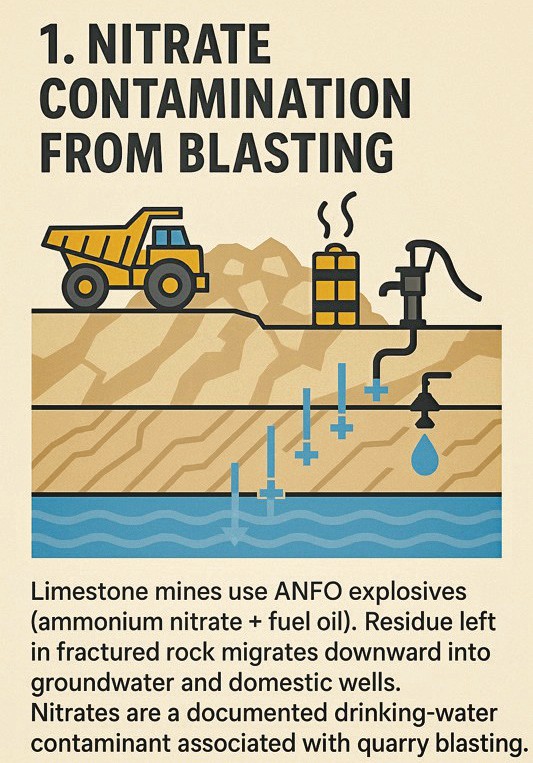
The most recent example is the plan by Simon Contractors to mine for limestone on 300 acres within the Piedmont city limits and in the surrounding Black Hills. Residents say they were blindsided by the plan, many saying they didn’t know about the proposal when they moved there. Simon published a notice October 7 in the Black Hills Pioneer. On Tuesday evening, at least 80 residents packed into the small house that has been converted to Piedmont City Council chambers.
The permitting process continues for the uranium exploration project adjacent to Craven Canyon in Fall River County with a second pre-hearing scheduled for January 6. “We’re still trying to move the actual permitting hearing, when it happens, to Hot Springs,” said Rebecca Turk from Dakota Rural Action. “NDN Collective has been working to move that forward with the county commissions in Fall River County, Oglala Lakota County, as well as the city of Hot Springs.” No final hearing dates have been set.
“The other uranium project, the Dewey Burdock project, which is twelve thousand acres in Fall River and Custer Counties is right up against the Wyoming border,” said Jarding. “We have been opposing this since our organization was founded in 2009, as have numerous tribes and organizations. We’ve been through three company name changes since they originally planned to mine uranium, and now they are still working through the permitting processes.” Jarding said that the EPA gave the company permission to pump mining waste water into the aquifer. “The permit allows the company to pump their waste water down into the Minnelusa Aquifer.” Jarding said the project would make it so that part of the aquifer in that area is designated by the EPA that it should never be used for drinking water.”
(Contact Marnie Cook at cookm8715@gmail.com)
The post Mining boom, water concerns and regulatory shifts highlight Environment and Water Gathering first appeared on Native Sun News Today.
 Shared by: Native Sun News Today
December 21, 2025
Shared by: Native Sun News Today
December 21, 2025
Tags: Top News