
Northern Cheyenne pay tribute to Battle of Punished Woman’s Fork
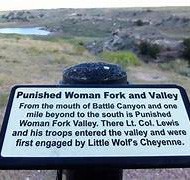
During the month of September, tribal elders and students remembered the last battle between the Northern Cheyenne and the U.S. Military which occurred on September 27, 1878 while the Cheyenne were fighting their way back from Oklahoma to Montana.
The Battle of Punished Woman’s Fork happened at Battle Canyon, Scott City, Kansas, part of the Northern Cheyenne’s flight to their homelands in Montana. As chronicled by Chief Dull Knife College and other historical sources, it was the last battle between the Northern Cheyenne and the U.S. Army. 254 Northern Cheyenne People had departed from Darlington Agency in Oklahoma on September 9, 1878, defying orders from the U.S. government that they had to stay in Oklahoma. 92 were warriors the rest women and children. Hundreds of U.S. Army were pursuing them, intent upon either capturing them; killing them; or forcing return to the Darlington Agency.
On that date, the Northern Cheyenne were exhausted from fighting their way through three distinct battle with the U.S. Calvary since fleeing Darlington Agency. At the Canyon, the warriors dug riffle pits at strategic points along to prepare for battle again. Their plan was to lure the soldiers into the Canyon for ambush.
Little Wolf, younger Chief and master military strategist had used this type of tactics in past battles. Cheyenne scouts watched as the soldiers marched toward the canyon. However, one eager you warrior, who was hidden in the rocks, fired at the soldiers before they into the valley – the planned ambush unraveled. Little Wolf instantly led the mounted warriors in a savage charge against the soldiers and the battle raged for several hours. During the battle, the women, children and elders huddled in a small cave located at the end of the canyon, relatively safe from the soldiers’ fire.
Lieutenant William Morris was hit by a fatal bullet that severed the femoral artery. After that, Captain Mauck assumed command, ordering a withdrawal to a nearby camp.
When darkness came, a strong wind came up enabling the Cheyenne to escape, climbing over a rock wall at the end of the canyon and quietly crawling down a shallow ravine undetected by the Army until the following morning. Knowing that relatively flat country they moved very stealthily, crawling through tall grass; moving from sage brush to sage brush, for example. The Cheyenne had abandoned their horses to make a quiet escape. The next morning soldiers found the Indian ponies, many with packs still fastened to their backs. Mauck detailed the solider to kill the horses and destroy the peoples’ food.
The Northern Cheyenne moved fast for three days and outdistanced the soldiers, even though on foot. When arriving at the Republican River, the warriors staged raids up and down the Kansas settlements to gather horse, weapons and cattle for food. They killed male settlers along what they had considered their home ground. It is estimated that nearly forty settlers were killed in one day along the Sappa and Breaver Creek in northern Kansas. The Cheyenne were desperate for survival and unfortunately many of the settlers killed were just in the wrong place at the wrong time.
Dr. Richard Littlebear has stated, “This battle was very important in our history. If caught, the Northern Cheyenne would have been sent back to Oklahoma and our precious North Country would only be a memory.”
As said at the most observance this year: Now we pay tribute to our ancestors who made this incredible desperate journey back to our beloved Northern Country.
(Contact Clara Caufield at acheyennereview@gmail.com)
The post Northern Cheyenne pay tribute to Battle of Punished Woman’s Fork first appeared on Native Sun News Today.
 Shared by: Native Sun News Today
October 10, 2025
Shared by: Native Sun News Today
October 10, 2025
Tags: Top News