
Truth-tellers and trailblazers
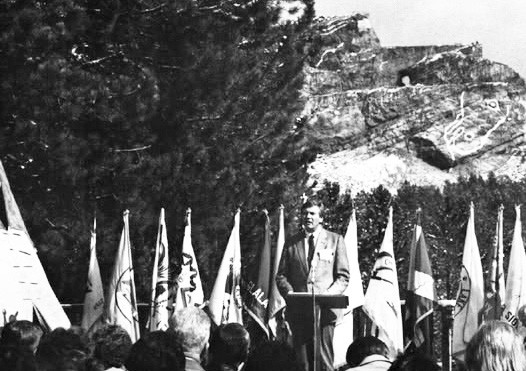
SD Governor George S. Mickelson addressing the audience at the first Native Americans’ Day celebration in October of 1990. Since, Crazy Horse Memorial® has hosted Native Americans’ Day celebrations annually on the second Monday in October. (Photo courtesy Crazy Horse Memorial)
In 1990, South Dakota made history by becoming the first state in the nation to replace Columbus Day with Native American Day — a bold and unprecedented move that signaled a shift in how the state acknowledged its Indigenous heritage. This landmark change was part of a broader initiative known as the Year of Reconciliation, launched by Governor George S. Mickelson to address long-standing racial divisions and honor the state’s Native peoples. The movement was sparked by the voices of two remarkable men: journalist Tim Giago and activist Lynn “Smokey” Hart.
Tim Giago, founder of the Lakota Times and later Native Sun News Today, was more than a journalist — he was a truth-teller, a cultural bridge-builder, and a relentless advocate for Native dignity. Born and raised on the Pine Ridge Reservation, Giago understood firsthand the deep wounds left by centuries of marginalization. He believed in the power of media to challenge injustice and elevate Native voices. In late 1989, Giago sat down with Governor Mickelson for an interview that would change the course of South Dakota history. When Giago asked the governor what he found most difficult about his job, Mickelson replied, “Trying to deal with the bad race relations between Indians and whites.” Giago recognized the significance of that admission and responded with a powerful editorial. He urged the governor to declare 1990 the Year of Reconciliation, to confront the state’s painful history, and to replace Columbus Day with Native American Day — a holiday that would honor the Lakota, Dakota, and Nakota peoples and acknowledge the legacy of colonization.
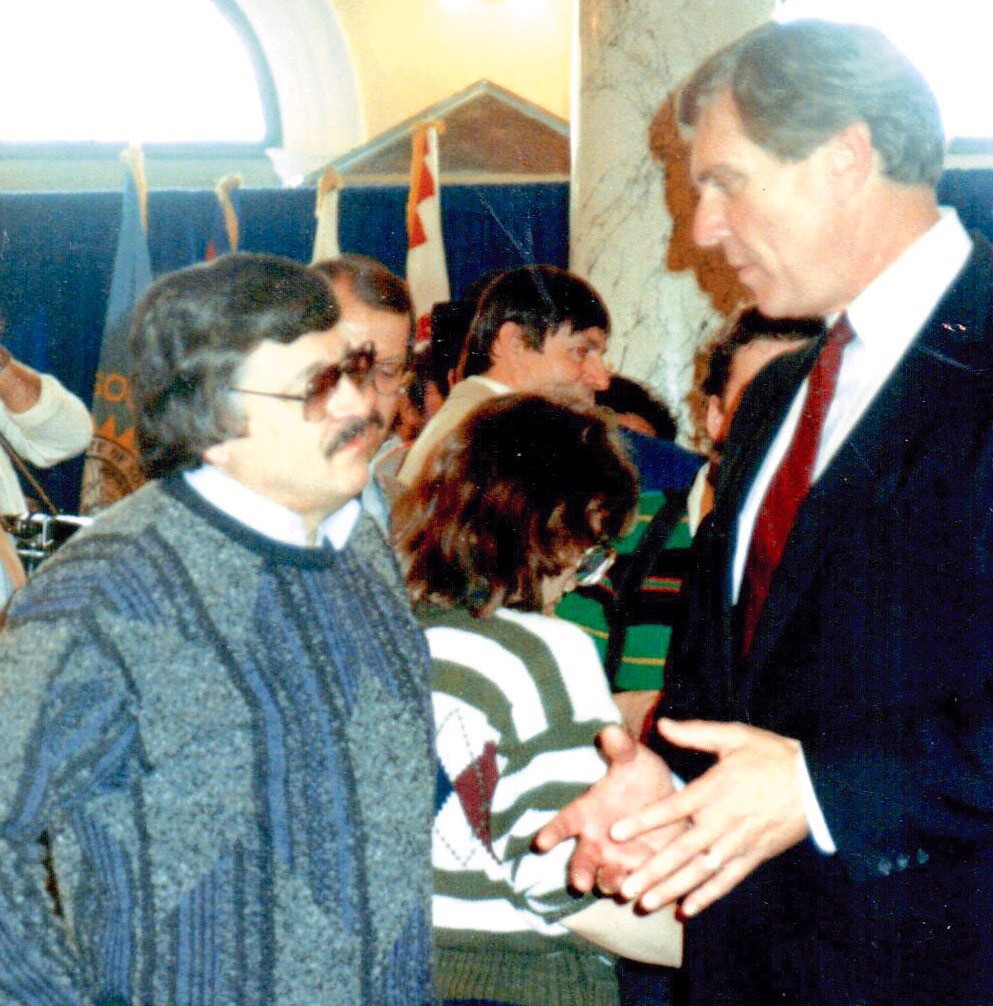
Tim Giago, left, is shown with the late Gov. George Mickelson in this file photo. It was Giago who successfully lobbied the governor to proclaim 1990 a year of Reconciliation between Indians and whites to honor the 100th anniversary of the Wounded Knee Massacre and to change Columbus Day to Native American Day.
Giago’s editorial was more than a call to action — it was a moral reckoning. He reminded readers that 1990 marked the 100th anniversary of the Wounded Knee Massacre, one of the darkest chapters in American history. On December 29, 1890, U.S. troops surrounded and killed more than 300 Hunkpapa and Mnicoujou Lakota men, women, and children near Cha.kpé Ópi. The massacre was the culmination of decades of broken treaties, forced removals, and violent suppression. Giago believed that South Dakota could not move forward without first acknowledging this past. The Year of Reconciliation, he argued, must begin with truth.
Governor Mickelson took Giago’s challenge seriously. He declared 1990 the Year of Reconciliation and committed to improving Native– non-Native relations through public dialogue, education, and cultural recognition. The initiative included forums, school programs, and symbolic gestures — none more significant than the creation of Native American Day.
Lynn Hart played a crucial role in this transformation. In January 1990, he testified before the South Dakota Legislature in support of making Martin Luther King Jr. Day a paid state holiday. At the time, the state only recognized it as a “working holiday,” and lawmakers were hesitant to change that. Hart, who is of Yankton Sioux and African-American descent, delivered an emotional speech that included reading Giago’s editorial aloud. He also urged legislators to rename Columbus Day. Though the Legislature initially rejected the MLK Day proposal — prompting this Rapid City Journal headline “House Panel Dumps King Holiday” — Governor Mickelson and House Majority Leader Jerry Lammers watched a videotape of Hart’s testimony and were deeply moved. Within days, Mickelson in the spirit of the “The Year of Reconciliation” proclamation he had just signed, declared both MLK Day and Native American Day official state holidays.
Hart later reflected on the moment with humility: “I walked in one day with nothing, walked out with two state holidays overnight. It’s never been done in any state in America, but it wasn’t me that did it. I’m the guy that got in the way.”
While Hart’s testimony was the spark, it was Giago’s editorial that laid the foundation. His words gave voice to a generation of Native South Dakotans who had long been denied recognition. His challenge to the governor was not confrontational — it was visionary. Giago understood that reconciliation required more than apologies; it demanded action, visibility, and respect. Native American Day was not just a holiday — it was a declaration that Indigenous history mattered, that Indigenous people belonged, and that South Dakota could lead the way in honoring both.
The Year of Reconciliation was more than a symbolic gesture. It marked a turning point in South Dakota’s relationship with its Native communities. It acknowledged the wounds of the past while laying the groundwork for a more inclusive future. And it was made possible by the courage and conviction of Tim Giago and Lynn Hart — two men who believed that truth, when spoken clearly and boldly, could change history.
Tim Giago was my mentor and muse. He taught me that journalism is not just about reporting facts — it’s about telling truths that others are afraid to speak. He believed in the power of stories to heal, to educate, and to transform. His legacy lives on in every edition of Native Sun News Today, and in every celebration of Native American Day across South Dakota.
As we continue to celebrate Native American Day each October, we honor not only the cultures and contributions of Indigenous peoples, but also the legacy of those who fought to make this day possible. Their voices still echo — in classrooms, in ceremonies, and in the pages of this very newspaper.
The first Native American Day celebration was held on October 12, 1990, at Crazy Horse Memorial, with Governor Mickelson and Tim Giago in attendance. The event featured Native artists, speakers, and cultural performances, and was broadcast by South Dakota Public Television. It marked the beginning of a new tradition — one rooted in truth, remembrance, and reconciliation.
And yet, more than three decades after Tim Giago called for healing and truth, the wounds of Wounded Knee remain open. In September 2025, U.S. Defense Secretary Pete Hegseth announced that the twenty Medals of Honor awarded to soldiers involved in the 1890 massacre would not be rescinded. “Their place in history is settled,” he declared. But for Native communities, the massacre of over 300 Hunkpapa and Mnicoujou Lakota men, women, and children is not a settled matter — it is a living scar. Giago believed that reconciliation required honesty and accountability. Hegseth’s decision, by contrast, valorizes violence and dismisses the truth that Giago, Hart and so many others have fought to preserve. Native American Day was born from a desire to honor Indigenous lives and reckon with history. That reckoning must continue.
(Contact Ernestine Anunkasan Hopa at editor@nativesunnews.today)
The post Truth-tellers and trailblazers first appeared on Native Sun News Today.
 Shared by: Native Sun News Today
October 10, 2025
Shared by: Native Sun News Today
October 10, 2025
Tags: Top News