
Wisconsin land dispute could impact South Dakota
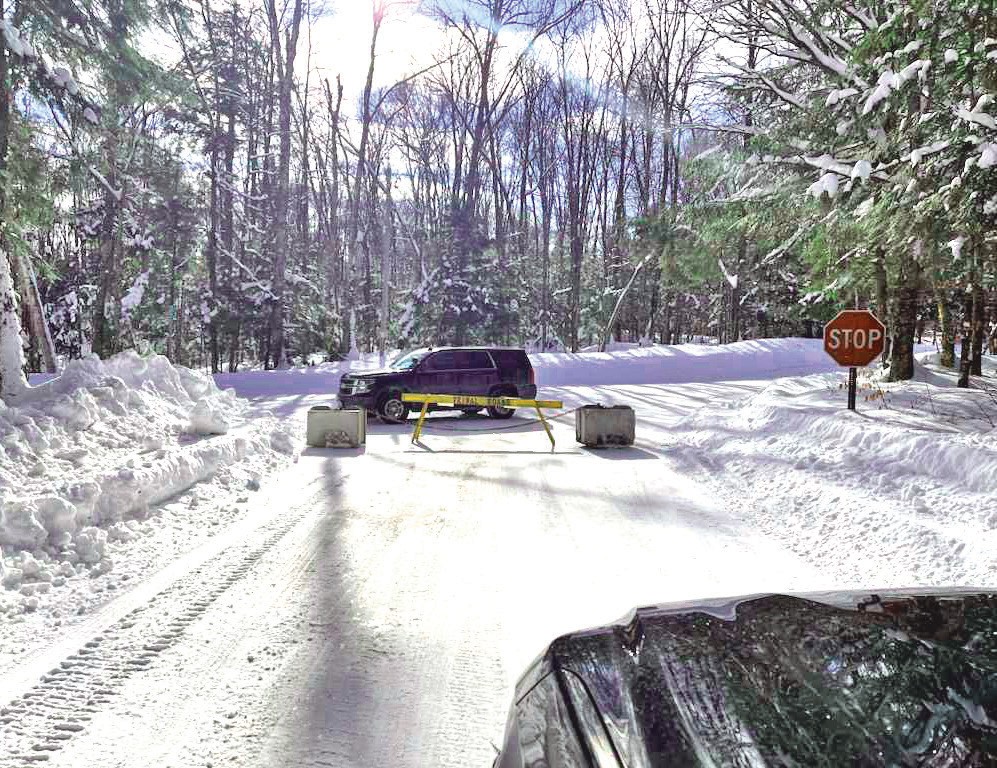
A dispute between the Lac du Flambeau Band of Lake Superior Chippewa, title companies and a local town resulted in the tribe blocking access to four roads crossing reservation land. (Photo courtesy of David Kievet)
RAPID CITY—A land dispute in Wisconsin could eventually reach the Supreme Court and directly impact the tribes in South Dakota. Dozens of non tribal homeowners living on four reservation roads within the Lac du Flambeau Reservation are caught in limbo as a long running dispute over easements and tribal sovereignty heads toward what could become a landmark decision—with implications for Indian country nationwide.
The dispute centers on four roads—Elsie Lake Lane, Center Sugarbush Lane, East Ross Allen Lake Lane and Annie Sunn Lane—that were built during the 1960s across tribal land under temporary lease agreements. Those leases expired more than a decade ago, and negotiations to renew them have stalled. In early 2023, tribal authorities erected barricades, severing motorized access to more than 60 homes.
“We feel trapped,” said homeowner David Kievet, whose property along Sugarbush Lane was appraised at about $710,000 before the dispute. “Now it’s maybe worth $100,000… I do understand the tribe’s position. But the residents living here didn’t create the problem.” He added: “Congress could come in and buy us all out and I would be OK with that.”
At issue is tribal sovereignty: the Lac du Flambeau Band contends the roads were illegally built, without valid compensation, and will neither grant indefinite easements nor allow roads to cross sensitive cultural or burial grounds.
“Our priority is the safety of our community, upholding our sovereignty, and ensuring the integrity of our land,” Tribal President John Johnson Sr. said in announcing that trespassing citations may now be issued to non tribal users.
“Essentially, they are asking us to give up our land,” the tribe stated in a Feb. 2023 release. “We have given up millions of acres… This is all we have left.”
U.S. District Judge William Conley has issued a limited injunction: the federal government cannot restrict access to the roads while litigation proceeds, though the injunction does not directly bind the tribe due to sovereign immunity issues.
Conley declined to enjoin the tribe itself from erecting future barricades, citing uncertainty whether a court could enforce such an order against a sovereign tribal government.
More than 70 homeowners and the town of Lac du Flambeau have joined in litigation. The U.S. Attorney’s Office filed suit on behalf of the tribe in mid 2023, suing the town for trespass damages estimated by the tribe at up to $20 million.
The potential stakes are national. Should the case be appealed, legal experts expect an eventual U.S. Supreme Court review, with its impact rippling across reservations where non tribal roads crisscross trust land. Among tribal legal analysts, this case is seen as a modern analog to precedents such as McGirt v. Oklahoma, which upheld the Muscogee (Creek) Nation’s reservation boundaries, and Montana v. United States, which limited tribal jurisdiction over non Indians—but only in narrow “Montana” exceptions.
Legal scholars point to the historic weight of such rulings. In McGirt (2020), the Supreme Court reaffirmed tribal sovereignty by following treaty text and congressional intent; by contrast, decisions like Oliphant v. Suquamish Indian Tribe (1978) and City of Sherrill v. Oneida Indian Nation (2005) eroded tribal authority by effectively rewriting the law.
From the tribal perspective, success could reinforce treaty based sovereignty, affirming that tribes retain authority over access across reservation lands—even where land was conveyed to non tribal owners under allotment policies. For non tribal rights of way or roads set up under outdated agreements, tribal governments could demand renegotiation or compensation.
Homeowners argue the reverse: historic reliance, good faith purchases, and reliance on assurances from title insurers and town officials. Many say they were told access would continue and did not understand the lease arrangements when purchasing. Homeowner Possin recounted she asked whether Elsie Lake Lane was private before buying in 2017 and was told it wasn’t. Yet after 14 hours’ notice, barricades went up.
One homeowner group member told PBS Wisconsin: “I firmly believe that Congress needs to step in and fix this. They could buy back the land from the homeowners and give it back to the tribe.”
Town leaders have pushed back, arguing these roads had long been designated as public roads and listed in federal inventories. After the tribe requested their removal from that list, the Bureau of Indian Affairs complied. The town continues to argue it has at least partial ownership or long-established public use rights.
A ruling in favor of the tribe could reaffirm tribal sovereignty in managing access across reservation lands—even where those roads serve non tribal homeowners. That might open doors for tribal governments nationwide to renegotiate or reclaim easements installed under previous policy eras.
Conversely, if courts side with homeowners, it could create precedent limiting tribal control over internal reservation land—even when title is held in trust. It might undercut tribes’ ability to enforce sovereignty over access and infrastructure, weakening jurisdiction in areas governed by checkerboard ownership.
For all federally recognized tribes, the case serves as a possible next chapter in how courts interpret the lingering outcomes of the Dawes Allotment Act and later Indian Reorganization Act, particularly in land checkerboard landscapes
• Tribal leaders insist they sought renewal of leases repeatedly, only to be ignored. They argue that prior access was erroneously granted under lapsed or improperly negotiated 25 to 50 year leases, and that protecting cultural integrity and burial sites is paramount. “We’re a sovereignty under the law,” tribal President Johnson said, noting that citations and road closures are not political gestures but legal necessities.
• Homeowners say they purchased in good faith and were assured of continued access. They argue rising access fees and uncertainty have devalued properties, disrupted lives and placed them at economic peril. They also cite reliance on title insurance and town assurances that the roads were properly classified.
• Legal scholars emphasize the limited number of federal easement renewal cases going to appellate court—but believe this one could set precedent. As one lawyer involved in the litigation told media, the case could be “the first to clarify whether tribal governments may charge for access already in use.”
Should the case reach the U.S. Supreme Court, it may reshape land access rights on reservation lands across the country. Tribes could gain greater control over roads and easements; non tribal landowners may face renewed uncertainty or even expulsion unless agreements are restructured.
(James Giago Davies is an enrolled member of OST. Contact him at skindiesel@msn.com)
The post Wisconsin land dispute could impact South Dakota first appeared on Native Sun News Today.
 Shared by: Native Sun News Today
August 1, 2025
Shared by: Native Sun News Today
August 1, 2025
Tags: Top News