
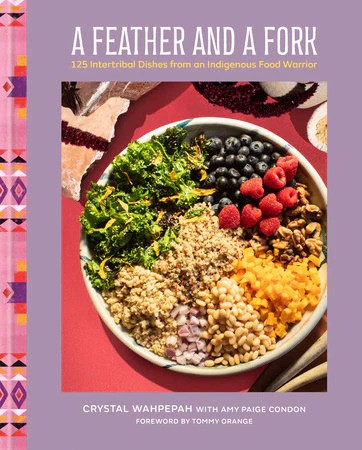
A Feather and A Fork: 125 Intertribal Dishes from an Indigenous Food Warrior
Author: Crystal Wahpapah
Crystal Wahpepah’s A Feather and A Fork: 125 Intertribal Dishes from an Indigenous Food Warrior is more than a cookbook, it is a reclamation, a remembering, and a gentle but firm insistence that Indigenous foodways are not relics of the past but living, breathing relatives. Wahpepah, an Oakland-based Kickapoo chef, brings the same spirit to this book that she brings to her kitchen: generosity, humor, and a fierce devotion to feeding people well.
What makes this book stand out immediately is its intertribal honesty. Wahpepah doesn’t pretend there is one monolithic “Native cuisine.” Instead, she moves across regions and Nations with respect, offering dishes that honor the land they come from, buffalo and chokecherries from the Plains, salmon and nettles from the Northwest, corn and beans from the Southwest, berries and wild rice from the Great Lakes. Each recipe feels like a small doorway into someone’s homeland.
The storytelling is where the book truly shines. Wahpepah writes like someone who has spent her life feeding people, with patience, with humor, and with that quiet authority that comes from knowing exactly who she is. Her reflections on growing up in Oakland’s Native community, learning from aunties and elders, and building her restaurant from scratch give the book a heartbeat. You don’t just read the recipes; you feel the lineage behind them.
The dishes themselves are accessible without being watered down, a balance many Indigenous cookbooks struggle to strike. Wahpepah respects traditional ingredients but also understands the realities of modern Native households, food deserts, limited access to game meats, and the need to adapt. She offers substitutions without shame, making the book usable for cooks from Oakland to Rapid City.
Standout recipes include her bison meatballs with berry glaze, a Three Sisters salad that tastes like summer in a bowl, and a cedar-infused salmon that carries the scent of the Northwest forests. But the quiet star of the book is her approach to vegetables, Indigenous, seasonal, and treated with the reverence they deserve. The foreword by Tommy Orange adds weight, grounding the book in the shared experience of urban Native identity. His presence signals what the book already knows: Indigenous food is Indigenous storytelling.
If there is a critique, it’s only that the book leaves you wanting more, more stories, more tribal histories, more of Wahpepah’s voice. But maybe that’s the point. A good meal should leave you satisfied, not stuffed, and ready to come back.
A Feather and A Fork is a celebration, a teaching tool, and a love letter to Indigenous food sovereignty. For Native readers, it feels like coming home. For non-Native readers, it is an invitation to understand the depth and brilliance of Indigenous foodways.
For cooks, aunties, food warriors, and anyone who believes feeding people is a sacred act, this book belongs on the kitchen counter, not the coffee table.
$35.00, 304 pp., Published by Rodale Books
The post A Feather and A Fork: 125 Intertribal Dishes from an Indigenous Food Warrior first appeared on Native Sun News Today.
 Shared by: Native Sun News Today
June 5, 2026
Shared by: Native Sun News Today
June 5, 2026
Tags: More News