
Mi’kmaq Nation adds 83 acres to ancestral land holdings in Maine
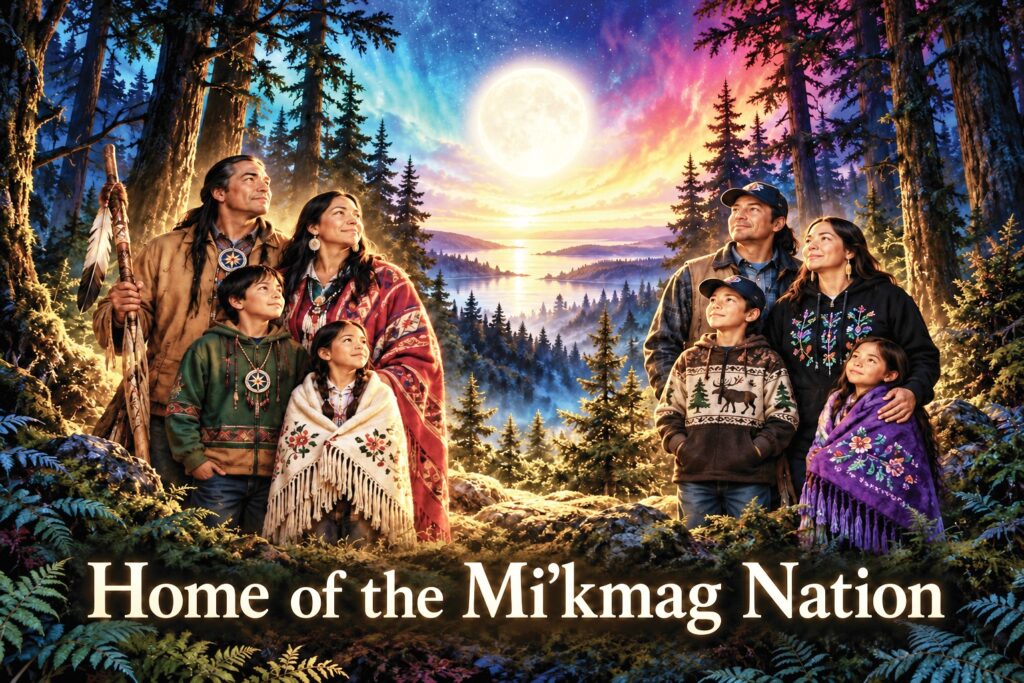
AI Graphic
CONNOR, ME— Another 83 acres of ancestral land have been returned to the Mi’kmaq Nation in northern Maine, continuing an ambitious effort to restore tribal ownership of lands that once sustained generations of Mi’kmaq families.
The newly acquired property, known as Pugweliget, borders four acres already owned by the tribe in Connor, providing 48 residents of an existing tribal housing community with immediate access to surrounding forests and wetlands.
The acquisition was made possible through a partnership with the Trust for Public Land, a national conservation organization working with Wabanaki tribes to return ancestral lands to Indigenous ownership.
Although considerably smaller than a 3,400-acre acquisition completed earlier this summer, tribal officials say the property’s location makes it especially valuable.
For residents, it means being able to walk into the woods, gather traditional foods and medicines, hunt, fish and enjoy the outdoors without worrying about trespassing on private property.
Shannon Hill, environmental health director for the Mi’kmaq Nation, said the acquisition represents something that cannot be measured simply in acreage: the freedom to reconnect with ancestral lands.
Hill described its importance as allowing tribal citizens to “take a walk and connect with the land as we did thousands of years ago without fear of trespassing.” The property will also be available to the Nation’s more than 1,600 citizens.
Beyond its cultural and recreational importance, the additional acreage will permit improvements to the driveway and septic systems serving the existing housing community. The opportunity arose when the previous landowner approached tribal leadership and offered the property to the Nation before placing it on the open market. Tribal officials contacted the Trust for Public Land, which raised the necessary funding within the seller’s timetable and arranged the transfer.
“Close to home outdoor spaces are critical to health and wellbeing,” said Betsy Cook, Maine state director for the Trust for Public Land. “Pugweliget not only provides space for neighbors to safely be outside, but also to reconnect with culture.”
The acquisition follows a much larger land return in June, when the Nation obtained 3,400 acres in Aroostook County, more than doubling its existing land holdings.
That property includes forests, wetlands and three miles of frontage along North Whitney Brook, providing opportunities for hunting, fishing, basket-making and teaching traditional skills to younger generations.
Historically, the Mi’kmaq occupied a vast territory known as Mi’kma’ki, encompassing much of present-day Nova Scotia, New Brunswick, Prince Edward Island, portions of Newfoundland, eastern Quebec and northern Maine.
Their traditional economy depended upon an intimate understanding of the land and its seasonal resources. Families moved between coastal and inland settlements, harvesting fish and shellfish during warmer months and hunting moose, deer and smaller game in the interior during winter.
Knowledge of animal migrations, spawning cycles, weather patterns and food preservation was passed from one generation to the next.
The return of Pugweliget provides an opportunity to continue those practices on land under tribal ownership. It also represents the seventh completed project under the Tributary Land Returns initiative, a partnership involving five federally recognized Wabanaki tribal governments and seven non-Native conservation organizations.
The initiative seeks to restore more than 50,000 acres to Wabanaki communities through 11 projects. For the Mi’kmaq Nation, the latest acquisition demonstrates that restoring ancestral land is not simply a matter of accumulating acreage.
Sometimes, 83 acres adjoining a community can make a greater difference in everyday life than thousands of acres located miles away.
(James Giago Davies is an enrolled member of OST. Contact him at skindiesel@msn.com)
The post Mi’kmaq Nation adds 83 acres to ancestral land holdings in Maine first appeared on Native Sun News Today.
 Shared by: Native Sun News Today
October 20, 2026
Tags: More News