
Seed planting tips
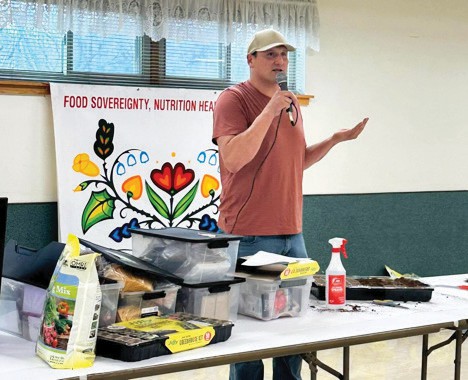
Jeff King, Blue Bird staff demonstrates seed planting. (Courtesy Blue Bird)
In late March the Blue Bird Lifeways organization located in Northern Cheyenne country presented a workshop in Lame Deer entitled “Reconnecting to Grandmother Earth – providing sustenance.”
That non-profit, their logo shown here, under the direction of Lynette Two Bulls, assists many people on the Northern Cheyenne Reservation with a wide variety of services and products to promote gardening, food self-sufficiency that is. About 68 people, ranging from grandparents to toddlers, attended the workshop, learned planting tips, and got their hands in the dirt by starting seedlings from materials provided by Blue Bird. Following are the primary tips which were shared:
When planting your garden, think about creating a beautiful space that you will enjoy. A space to nurture your plants and flowers, and reconnect with Grandmother Earth; in turn, you and your family will be nourished.
Planting times
Late March: plant long-germinating seeds indoors, such as onions, leeks, celery, tomatoes, peppers, Brussels sprouts, broccoli, herbs, and flowers. Keep soil moist and warm until they sprout, then give them sunlight.
Early April: Before you plant/disturb Earth, pray, offer tobacco, give gratitude. Make a list of what you want to grow. Remember, a garden box has less space, so select flowers to grow that will attract bees to pollinate. Locate an easy-access, sunny place for your garden; work the soil as little as possible. Our soil relatives will stay healthier. Till the earth only if necessary.
Mid-April: Before you plant/disturb the Earth, pray, offer tobacco, give gratitude. Plant seeds inside: squash, melons, and cucumbers. Plant starter plants in outdoor beds: beets, carrots, Cilantro, greens, and onions. Water all seed and plants, both inside and outside, to be moist, not too wet or dry. Lynette Two Bulls says the soil should feel like “moist” chocolate cake.
End of May: Before you plant/disturb the Earth, pray, offer tobacco, give gratitude. Plant in regular spot garden and/or a raised smaller garden bed. Mark rows and identify what is planted in each. Plant all starters, potatoes, and seeds in your garden. Plant the “Three Sisters” together—beans, corn, and squash. Use fertilizers such as cold liquid fish, liquid compost, aged manure, or organic alfalfa meal. Cover tender plants with hoops and garden cover on cold nights, and finally water every day, so that the soil is always moist!
Basic tips for seed starting: Keep soil fairly loose. Young seed roots are delicate and need wiggle-room to grow. Generally speaking, plant seeds twice as deep as they are big, then cover with soil. For little, tiny seeds, just sprinkle them on top and lightly cover with soil. Plant 2-3 seeds per cell (the small organic starter pots) so that at least one germinates. Water from the top with a spray bottle and cover with the plastic lid that comes with a starter kit. Keep planted seeds in warm place with lid on until the seeds sprout. Then, water enough so the soil stays moist, but not soaked. When seeds sprout, take the cover off to let them cool down and breathe, which is the first step to helping them prepare to move outside. When growth is about 2-3 inches tall, move the young plant to a larger container. About 1-2 weeks before you transplant outdoors, start “hardening” them. That is, take them outside a little each day. That gets the plants strong and ready to live in the wind and natural elements. Finally, transplant them to their forever home after the last frost.
Gardening is also wonderful for human beings, as Two Bulls said. It gets people outside, helps them keep active, and is a natural family affair. The photo accompanying this article underscores that notion. It shows Donna Fisher, grandmother, daughter and grandson all happily starting seedlings together at the seed planting workshop. “I want my grandchildren to be growing gardens, their own food, long after I’m gone,” said Donna, a master gardener.
Thank you Blue Bird for promoting gardening and food self-sufficiency among the Northern Cheyenne, and for allowing us to share this important information with our readers. For more information about gardening tips visit their Facebook or website at www.BlueBirdLifeways.org.
(Contact Clara Caufield at acheyennereview@gmail.com)
The post Seed planting tips first appeared on Native Sun News Today.
 Shared by: Native Sun News Today
April 10, 2026
Shared by: Native Sun News Today
April 10, 2026