
Two indictments, one pattern
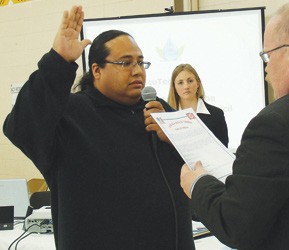
Mason Big Crow is sworn in as Treasurer of the Oglala Sioux Tribe in Pine Ridge on March 21, 2011. Big Crow now faces federal charges alleging theft of tribal funds and conspiracy to distribute fentanyl. (Photo by Ernestine Anunkasan Hopa)
RAPID CITY — When federal prosecutors first indicted former Oglala Sioux Tribe Treasurer Mason Big Crow in 2024 for embezzling tribal funds, the case looked like another painful entry in the long ledger of financial misconduct that has haunted tribal governments for decades. But two years later, when Big Crow and his wife, Misty Standing Bear, were indicted again, this time for allegedly operating a fentanyl trafficking ring, the story widened into something far darker. What began as a financial crime has now become a federal narrative that links stolen tribal money to a yearslong drug operation that allegedly pumped counterfeit fentanyl pills into Pine Ridge and Rapid City.
The first indictment, unsealed in November 2024, accuses Big Crow of using his nearly exclusive access to the tribe’s debit and credit cards, as well as its bank accounts, to make unauthorized personal purchases between January 2021 and March 2023. The case was brought under the Guardians Project, a federal initiative aimed at rooting out corruption and misuse of federal funds in tribal communities. At the time, the charges seemed straightforward: a treasurer accused of stealing from the very people he was entrusted to serve.
But investigators were already uncovering something else. By the time the second indictment was unsealed in late May 2026, federal prosecutors alleged that Big Crow and Standing Bear had been running a fentanyl trafficking conspiracy dating back to at least 2021, the same period during which the embezzlement allegedly occurred. According to the indictment, the couple traveled to other states to obtain thousands of counterfeit M/30 fentanyl pills and brought them back to South Dakota for distribution on the Pine Ridge Reservation and in the Rapid City area. Investigators say the operation continued into 2026, and that Standing Bear traveled to Colorado in May of that year to purchase 1,000 counterfeit pills at Big Crow’s direction.
The detail that ties the two cases together is the allegation that some of the fentanyl purchases were financed using fraudulent tribal assistance checks while Big Crow was serving as treasurer. In other words, prosecutors contend that the same access to tribal money that enabled the theft also helped fuel a drug pipeline back into the community.
The timeline tells the story plainly. Between 2021 and 2023, Big Crow allegedly embezzled tribal funds. During that same period, and continuing for years afterward, he and Standing Bear allegedly trafficked fentanyl. The first indictment came in 2024. The second followed in 2026. The overlap is not incidental. It is the core of the federal theory: that the community was harmed twice, first through stolen money and then through fentanyl purchased with that money.
Federal officials have been unusually blunt in their public statements. FBI Special Agent in Charge Christopher Dotson said Big Crow was “already alleged to have committed crimes against his community for personal gain” and was now accused of conspiring to distribute dangerous narcotics to that same community. The message was unmistakable. This was not just a financial betrayal. It was a communal one, with consequences that reach far beyond balance sheets and bank accounts.
The indictments also land in a politically charged environment. Two years ago, Gov. Kristi Noem claimed that Mexican cartels were operating on reservations, a claim tribal nations rejected as inflammatory and unsupported. The facts in these cases matter. Neither indictment mentions cartels. The pills were obtained in other U.S. states, not through cartel networks. And the allegations involve two individuals, not tribal governments or communities. But the political narrative is already shifting, and it is easy to see how these cases will be used to reinforce stereotypes rather than illuminate the truth.
For Pine Ridge, the impact is deeper than politics. A treasurer accused of stealing from his own people is painful enough. Learning that some of that money may have helped finance a fentanyl operation that targeted the same community adds another layer of betrayal. The reservation has been fighting for its life against addiction, poverty, and the erosion of public trust for years. These indictments strike at the heart of that struggle.
They also raise uncomfortable questions about oversight, accountability, and the systems that allowed this to continue for so long. Who was watching the books? Who was watching the money? Who was watching the community? And why did it take federal agents, not tribal oversight, to uncover the full scope of what was happening?
Both defendants have pleaded not guilty, and both cases are still pending. The presumption of innocence remains. But the indictments, taken together, reveal a pattern that federal investigators say harmed the Oglala Sioux Tribe twice over. This is not just a crime story. It is a story about governance, addiction, betrayal, and the long shadow of federal oversight in Indian Country. And it is far from finished.
(Contact Ernestine Anunkasan Hopa at editor@nativesunnews.today)
The post Two indictments, one pattern first appeared on Native Sun News Today.
 Shared by: Native Sun News Today
June 6, 2026
Shared by: Native Sun News Today
June 6, 2026
Tags: Top News