The Significance of Black History Month

This Month is Black History Month, which is officially recognized by the United States, Canada, and Germany. Black History Month is also recognized by the U.K., Ireland, and the Netherlands, but celebrated October. Panama celebrates Black heritage in May. Black History Month originated in the U.S., where it is also known as African-American History Month.

The precursor to Black History Month was Black History Week which was first celebrated 1926, as an educational endeavor of American Scholar Dr. Carter Woodson (1875-1950). The specific calendar week was chosen because it coincided with the birthdates of both Abraham Lincoln (February 12th) and Frederick Douglass (February 14th). These gentlemen’s birth dates have been celebrated together by American black communities since the late 19th century, in recognition of the significant impact these two individuals had on Black American life.

Dr. Woodson pushed to bring black history into public consciousness, noticing that the role of African Americans in American History was either misrepresented or missing altogether from the history books of his time. Black history was largely ignored by historians and the general public until the 20th century; Dr. Woodson is attributed as a significant force in changing all that, through the coordination of teaching the history of black Americans in the nation’s public schools.

Much of the history of black people wasn’t known by blacks or whites until black history was taught in school. The research and dissemination of black history has countered myths that slaves were well-treated under slavery or that blacks had been better off under slavery. It also, by lifting examples of extraordinary individuals, provided examples of Americans for children to look-up to, emulate, and have pride in.

Black History week grew in popularity over the following decades, with Mayors across the United States endorsing it as a holiday. Black History Month was first proposed by black history educators at Kent State University in Ohio, and officially became recognized by President Ford during the celebration of the United States Bicentennial, in 1976.

While Black History month has helped the growing cultural identity among the black community, it’s significance to all Americans can not be overstated. We can not make America Great while blind to one another or to our history, and without examples of greatness from the full spectrum of our citizenry. All these things are part of the shared history of the United States.

There are now numerous resources available for anyone wishing to learn more about Black History in the United States. There is a great deal more each of us can personally learn about the history of Black Americans. If you know of other resources, comment in our discussion forums, and we’ll see if we can add them to our list.

This is What We’ve Identified So Far:

Black History Month Resource Guide for Educators and Families, from the Center For Racial Justice in Education.

Resources from the African American History Month Government website, and

Black History Month Lessons & Resources, from the National Education Association.

You can find more resources related to diversity and inclusion by selecting the “Diversity and Inclusion” category tab on our Social Service “Utilization Library” page.

-AMAZONPOLLY-ONLYAUDIO-START- You can find links to the resources mentioned in this episode with the written version of this story on our website at cincinnati, dot, united resource connection, dot, org. You’ve been listening to the Cincinnati Social Service News, now available as a podcast on Amazon Music, Audible, Apple Podcasts & iTunes, YouTube, and Spotify. If you have social service news to submit to this podcast, visit cincinnati dot united resource connection dot org. Once there you can also subscribe to get a free summary of the past week’s local social service news stories emailed to you every Monday morning. So subscribe to our e-newsletter and podcast, and visit us online to discover more social service news and resources. -AMAZONPOLLY-ONLYAUDIO-END-



Free Online Mental Health Course for Teens

Yale Psychology Professor Dr. Laurie Santos offers an online 6-week course designed to help teens make wiser choices and live a life that’s happier and more fulfilling. In this course, teens explore what the field of psychology teaches about how to be happier, how to feel less stressed, and how to thrive in high school and beyond. The lessons along with short weekly homework assignments about happiness prepare teens to put scientific findings into practice.

The goal of the course is for teens to feel better and build healthier habits. Parents, teachers, and other professionals supporting teenagers may also find the course beneficial. The course is FREE and starts Tuesday February 10th. The syllabus of the course is available online and indicates approximately 2 hours of classwork per week, consisting of videos and assignments. There are 12 total hours of content, though course deadlines can be reset in accordance with one’s personal schedule. An email address is required to register.

Dr. Santos has won numerous awards from institutions such as Yale and the American Psychological Association for both her science and teaching. You can visit the course website to learn more and sign up.

You can find more resources related to youth development by selecting “youth development” from the dropdown tab on our Social Service “Utilization Library” page.

-AMAZONPOLLY-ONLYAUDIO-START- You can find links to the resources mentioned in this episode with the written version of this story on our website at cincinnati, dot, united resource connection, dot, org. You’ve been listening to the Cincinnati Social Service News, now available as a podcast on Amazon Music, Audible, Apple Podcasts & iTunes, YouTube, and Spotify. If you have social service news to submit to this podcast, visit cincinnati dot united resource connection dot org. Once there you can also subscribe to get a free summary of the past week’s local social service news stories emailed to you every Monday morning. So subscribe to our e-newsletter and podcast, and visit us online to discover more social service news and resources. -AMAZONPOLLY-ONLYAUDIO-END-

Resources on Social Security Gov Website

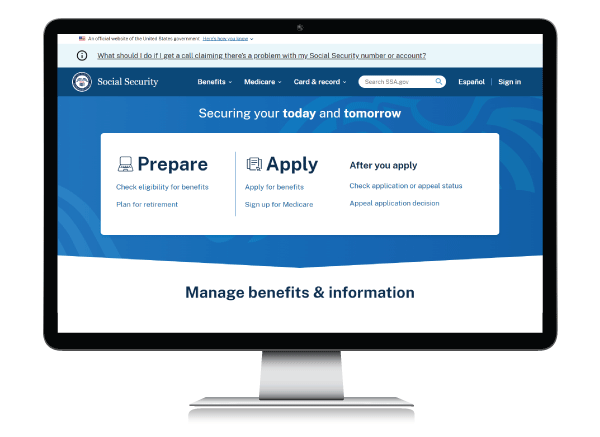
The Social Security Administration website provides direct access to do things like: Check eligibility for benefits, Plan for retirement, Apply for benefits, Sign up for Medicare, Appeal a decision, and/or Check application or appeal status.

They offer four portals on their website to accomplish these tasks: there’s a “Documents” portal, a “Number & Card” portal, a “Payment” portal, and “Record” portal.

Through the Documents portal you can Get a benefit verification letter, or Get tax forms like 1099s or 1042s).

Through the Number and Card portal you can Replace a social security card, Request a social security number for the first time, or Report a stolen number.

Through the Payment portal you can Update direct deposit, Repay overpaid benefits, Request to withhold taxes, or View a benefit payment schedule.

And through the Record portal you can Update contact information, Update an incorrect birthday, and/or change your name. You can learn more by visiting the redesigned site.

You can find more social security resources by selecting the “Social Security” category tab on our Social Service “Utilization Library” page.

-AMAZONPOLLY-ONLYAUDIO-START- You can find links to the resources mentioned in this episode with the written version of this story on our website at cincinnati, dot, united resource connection, dot, org. You’ve been listening to the Cincinnati Social Service News, now available as a podcast on Amazon Music, Audible, Apple Podcasts & iTunes, YouTube, and Spotify. If you have social service news to submit to this podcast, visit cincinnati dot united resource connection dot org. Once there you can also subscribe to get a free summary of the past week’s local social service news stories emailed to you every Monday morning. So subscribe to our e-newsletter and podcast, and visit us online to discover more social service news and resources. -AMAZONPOLLY-ONLYAUDIO-END-
Martin Luther King Day of Service

Martin Luther King Jr. Day is the only federal holiday designated as a day of service, to encourage all Americans to volunteer to take action toward the improvement of their community. In observance of the national holiday, schools, government agencies, businesses and banks are closed each year on the third Monday in January.

Dr. Martin Luther King Jr. was a pastor and civil rights leader who dedicated his life to achieving racial equality — a goal he said was inseparable from alleviating poverty. King helped organize peaceful rallies and boycotts to influence social change. King’s example of improving community and his insistence on nonviolence in this effort continue to influence many activists pursuing the actualization of civil rights and social change today.

In his now famous “Letter From a Birmingham Jail,” Dr. King outlined basic steps required to have a successful nonviolent campaign against injustice. Dr. King and his fellow activists conducted workshops, training people how to incorporate these steps into community action. Following these workshops, they conducted their nonviolent social protests, such as sit-ins at lunch counters, kneel-ins of African Americans at white churches, and other forms of social protest. Dr. King’s message was consistently a balance between indignation and a calling to greater love.

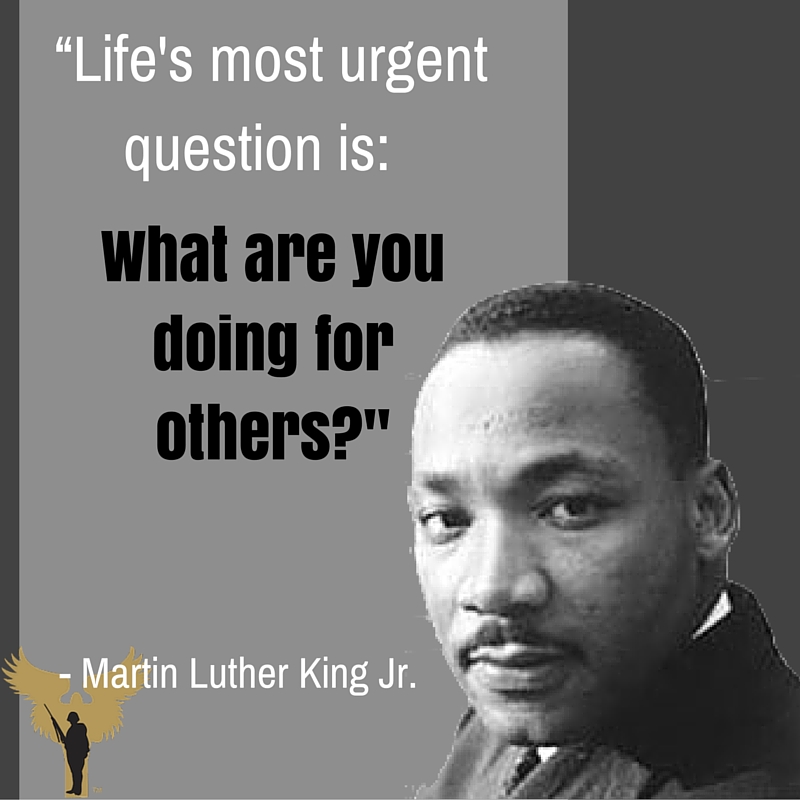
He was awarded the Nobel Peace Prize for this work in 1964. He was murdered 4 years later on April 4, 1968. He was 39 years old. He would have turned 97 on January 15th this year. One of Dr. King’s most famous quotes is that “Life’s most persistent and urgent question is, What are you doing for others?”.

You can find more resources related to diversity and inclusion and spiritual development by selecting the “Diversity & Inclusion” and/or “Spiritual Resources” category tab on our Social Service “Utilization Library” page.

-AMAZONPOLLY-ONLYAUDIO-START- You can find links to the resources mentioned in this episode with the written version of this story on our website at cincinnati, dot, united resource connection, dot, org. You’ve been listening to the Cincinnati Social Service News, now available as a podcast on Amazon Music, Audible, Apple Podcasts & iTunes, YouTube, and Spotify. If you have social service news to submit to this podcast, visit cincinnati dot united resource connection dot org. Once there you can also subscribe to get a free summary of the past week’s local social service news stories emailed to you every Monday morning. So subscribe to our e-newsletter and podcast, and visit us online to discover more social service news and resources. -AMAZONPOLLY-ONLYAUDIO-END-
Physical Activity Guidelines & Resources for Disease Prevention in 2026

The Second Edition of the U.S Department of Health and Human Services’ Physical Activity_Guidelines is available as a pdf for download. The guidelines are provided by the Office of Disease Prevention and Health Promotion, and provide evidence-based guidance to help people maintain or improve their health through physical activity. They also have released a number of resources that highlight simple steps people can take to get active and eat healthy. While each resource is available in English and Spanish, the physical activity guidelines themselves are currently only available in English.

[doc id=64401]

10 Key Messages

The 2nd Edition has 10 key messages for individuals and families

1) There are new key guidelines for children ages 3 through 5, and updated guidelines for youth ages 6 through 17, adults, older adults, women during pregnancy and the postpartum period, adults with chronic health conditions, and adults with disabilities. All of these guidelines are evidence-based.

2) Adults caring for preschool-aged children, ages 3-5, should encourage at least 3 hours per day of active play (light, moderate, or vigorous intensity). This level of activity enhances growth and development.

3) Youth age 6 through 17 years old need at least 60 minutes per day of moderate-to-vigorous aerobic physical activity. Examples include running, or anything that makes the heart beat faster. These youth also need activities that make their muscles and bones strong, like climbing on playground equipment, playing basketball, and jumping rope.

4) Adults need more than 2 1/2 hours of moderate-intensity aerobic activity, like brisk walking or fast dancing, each week. Adults also need muscle-strengthening activity, like lifting weights or doing push-ups, at least 2 days each week.

5) The latest scientific evidence shows that physical activity has many health benefits independent of other healthy behaviors, like good nutrition.

6) The first key guideline for adults is to move more and sit less. New evidence shows a strong relationship between increased sedentary behavior and increased risk of heart disease, high blood pressure, and all-cause mortality. All physical activity, especially moderate-to-vigorous activity, can help offset these risks.

7) Any amount of physical activity has some health benefits. Don’t treat the recommendations as all or none. Moving more frequently throughout the day, regardless the amount, helps to eventually meeting the guidelines.

8) New evidence shows that physical activity has immediate health benefits. For example, physical activity can reduce anxiety and blood pressure and improve quality of sleep and insulin sensitivity.

9) Meeting the recommended guidelines consistently over time can lead to even more long-term health benefits. For example: For youth, physical activity can help improve cognition, bone health, fitness, and heart health. It can also reduce the risk of depression. For adults, physical activity helps prevent 8 types of cancer (bladder, breast, colon, endometriumesophaguskidneystomach, and lung); reduces the risk of dementia (including Alzheimer’s disease), all-cause mortality, heart disease, stroke, high blood pressure, type 2 diabetes, and depression; and improves bone health, physical function, and quality of life. For older adults, physical activity also lowers the risk of falls and injuries from falls. For pregnant women, physical activity reduces the risk of postpartum depression. And for all groups, physical activity reduces the risk of excessive weight gain and helps people maintain a healthy weight. And…

10) New evidence shows that physical activity can help manage more health conditions that Americans already have. For example, physical activity can decrease pain for those with osteoarthritis, reduce disease progression for hypertension and type 2 diabetes, reduce symptoms of anxiety and depression, and improve cognition for those with dementia, multiple sclerosis, ADHD, and Parkinson’s disease.

Additional Resources

The U.S. Department of Health has also published resources specifically aimed at different demographics such as: adult men and women; older adults; pregnant and postpartum people; and parents. These resources present personal stories of people within each demographic, providing examples of how they meet the recommended guidelines of physical activity in their daily lives.

You can find more resources related to physical health by selecting the “Primary Medical Care” and/or “Recreation” category tab on our Social Service “Utilization Library” page.

-AMAZONPOLLY-ONLYAUDIO-START- You can find links to the resources mentioned in this episode with the written version of this story on our website at cincinnati, dot, united resource connection, dot, org. You’ve been listening to the Cincinnati Social Service News, now available as a podcast on Amazon Music, Audible, Apple Podcasts & iTunes, YouTube, and Spotify. If you have social service news to submit to this podcast, visit cincinnati dot united resource connection dot org. Once there you can also subscribe to get a free summary of the past week’s local social service news stories emailed to you every Monday morning. So subscribe to our e-newsletter and podcast, and visit us online to discover more social service news and resources. -AMAZONPOLLY-ONLYAUDIO-END-
Enrollment Opportunities for Medicare and Medicare Prescription Payment Plan

Medicare’s annual open enrollment period concluded on December 15th, but other enrollment opportunities for Medicare coverage are getting underway. Ohioans on Medicare who did not sign up for Part A (hospital insurance) and or Part B (medical insurance) during their initial enrollment period, and do not qualify for a special enrollment period, can sign up for Medicare during the January 1st to March 31st general enrollment period. Coverage begins on the first day of the month after signing up.

The Medicare Advantage open enrollment period also runs from January 1st to March 31st. During this time, individuals in a Medicare Advantage plan can switch to another Medicare Advantage plan or return to Original Medicare. For Ohioans impacted by network disruptions with Medicare Advantage plans, this enrollment period is another opportunity for Medicare Advantage plan enrollees to review their provider networks and determine if their current plan is adequate or if another plan (or Original Medicare) would be a better alternative. Any changes made during this period will take effect on the first day of the month after the new plan receives the request. 

Additionally, starting January 1st, two new special enrollment periods are available. One is for individuals who are eligible for both Medicare and Medicaid, and the other is for those who qualify for Extra Help, a low-income subsidy for prescription drug costs. You can find more information about this on Medicare.gov. Staff from the Ohio Senior Health Insurance Information Program are available at 800-686-1578, and by email to answer any questions. 

Enrollment options are also available for the Medicare Prescription Payment Plan. The Medicare Prescription Payment Plan is a new payment option that works with current drug coverage to help manage out-of-pocket Medicare Part D drug costs by spreading them across the calendar year (January through December). Starting in 2025, anyone with a Medicare drug plan or Medicare health plan with drug coverage (like a Medicare Advantage Plan with drug coverage) can use this payment option. All plans offer this payment option and participation is voluntary.

A pdf is available for download and dissemination that provides more information about the Medicare Prescription Payment Plan for interested parties.

[doc id=105458]

If one has any questions, the Ohio Senior Health Insurance Information Program hosts a FREE Welcome to Medicare webinar for people nearing Medicare eligibility. The webinar provides an overview of eligibility, enrollment, and coverage options. Webinar dates are as follows: January 14th, 6 PM to 7 PM; February 12th, 4 PM to 5 PM; March 10th, 6 PM to 7 PM; April 23rd, 4 PM to 5 PM; May 12th, 6 PM to 7 PM; June 11th, 4 PM to 5 PM; July 15th, 6 PM to 7 PM; August 5th, 4 PM to 5 PM; September 15th, 6 PM to 7 PM; and October 2nd, 4 PM to 5 PM.  Registration for these webinars is available online.  

You can find more Medicare resources by selecting the “Medicaid & Medicare” category tab on our Social Service “Utilization Library” page.

-AMAZONPOLLY-ONLYAUDIO-START- You can find links to the resources mentioned in this episode with the written version of this story on our website at cincinnati, dot, united resource connection, dot, org. You’ve been listening to the Cincinnati Social Service News, now available as a podcast on Amazon Music, Audible, Apple Podcasts & iTunes, YouTube, and Spotify. If you have social service news to submit to this podcast, visit cincinnati dot united resource connection dot org. Once there you can also subscribe to get a free summary of the past week’s local social service news stories emailed to you every Monday morning. So subscribe to our e-newsletter and podcast, and visit us online to discover more social service news and resources. -AMAZONPOLLY-ONLYAUDIO-END-

For Children of Addiction, Support Resources During the Holidays

For children and young adults of families impacted by addiction, the holidays, substance misuse, and its related stresses may bring on a great deal of additional fear and isolation. Here are some resources and guidance that can be used to help them through the season.

The National Association for Children of Addiction has produced an infographic titled The Importance of Holiday Rituals for Children of Addiction. It emphasizes the importance of maintaining normal routines, even during the holiday season. In families of addiction, maintaining normal routines provides structure that helps make a child’s world feel reliable and safe, even amidst difficult situations.

[doc id=64190]

They also provide a Kit for Parents, which includes suggestions and tools for raising children in an household where one parent is actively abusing alcohol. And for children of alcoholics or addicts, clinical psychologist, Dr. Andrea Bonior, has an article about How to Set Boundaries With Family, and how to stick to those boundaries.

Al-Anon Family Groups also provide a number of resources. One of these is an article/interview titled Suggestions for Caregivers of Children in a Home Affected by Alcohol Misuse or Addiction. This is a great resource to help adults better care for children who feel the damaging effects that addiction can have on a family. They also provide an online resource called the Alateen Teen Center, for teens living in a family affected by addiction. It provides a safe way for these teens to connect and find effective ways to cope with problems. The Al-Anon/Alateen website has information and meeting schedules (electronic & phone meetings accessible during inclement weather).

Another crisis resource is the SAMHSA National Helpline, for individuals and families facing mental and/or substance use disorders. Simply call 1 (800) 662-4357 to be connected support professionals. In addition to the phone line, they also have an online portal to find local substance abuse treatment facilities. Additional resources include the 9 8 8 National Suicide and Crisis Lifeline. Simply dial 9 8 8 to be connected to crisis support professionals.

You can find more resources related to child development, mental health, and addiction by selecting the “child development”, “mental health“, and/or “addiction treatment” category tabs on our Social Service “Utilization Library” page.

Paid participation in medical surveys, focus groups and other medical research projects.

There are a number of programs in healthcare industry that pay patients money to participate in research projects. From the perspective of a potential patient participant, paid participation in medical surveys, focus groups, and other research projects can offer several benefits. Firstly, it provides an opportunity to contribute to medical advancements and potentially help improve treatments and outcomes for others in similar health situations. Additionally, the monetary compensation can help offset any costs associated with participating in the research, such as transportation or time off work. On the flip side, some potential drawbacks to consider include concerns about privacy and the security of personal medical information shared during the research process. Participants should also be aware of any potential risks or side effects of the research procedures they may be involved in. Overall, weighing the benefits and risks can help individuals make an informed decision about whether paid participation in medical research projects is right for them.

Savvy Cooperative is one of the organizations like this that recruits and pays individuals to participate in medical surveys, focus groups, and other medical research projects. They are a patient-owned public benefit co-op. A patient-owned public benefit co-op may be a better choice when selecting among companies that recruit patients for research studies because it prioritizes the interests and well-being of patients above all else. By being legally bound to serve as a benefit to the public, these co-ops ensure that patients are treated ethically and fairly throughout the research process, creating a more trustworthy and patient-centric environment for participation.

Savvy Cooperative recruits individuals from all medical and behavioral diagnoses. United Resource Connection has partnered to help them recruit interested individuals, and we receive about $50 per person that we successfully refer. Here’s is how the process works:

Step 1. If you are interested in being paid to participate in surveys, focus groups, or other medical research, sign up on their website. You will be asked a number of questions about your health and medical status.

Step 2. They will find researchers with projects that match your medical status.

Step 3. You will complete a questionnaire, participate in a focus group, or share information with the researcher in some other way.

Step 4. You earn an average of $110.00 per hour and United Resource Connection earns $50.00 per completed project.

You share only as much information as you want to during the process, your information is not used for marketing or sales purposes, and no one will contact you trying to sell anything. You choose which studies you want to participate in. Participants earn extra money, URC earns funding, and researchers get the data they need.

If this sounds like something you would be interested in, visit their website using the link in this article so that URC receives credit for the referral. If you have any questions you may contact them via the email address they provided.

-AMAZONPOLLY-ONLYAUDIO-START- You can find links to the resources mentioned in this episode with the written version of this story on our website at social service news, dot, org. You’ve been listening to the Social Service News Network, now available as a podcast on Amazon Music, Audible, Apple Podcasts & iTunes, YouTube, and Spotify. If you have social service news to submit to this podcast, visit social service news dot org. Once there you can also subscribe to get a free summary of the past week’s social service news stories emailed to you every Monday morning. So subscribe to our e-newsletter and podcast, and visit us online to discover more social service news and resources. -AMAZONPOLLY-ONLYAUDIO-END-

Navigating the Health Insurance Marketplace

The Health Insurance Marketplace is an online tool to investigate and select the best medical health insurance plan for your situation. All the options available in the Health Insurance Marketplace are ACA compliant. “ACA compliant” means that the insurance plan follows the rules of the Affordable Care Act, which was passed by Congress in 2010. These rules were in part meant to protect individuals and families from being taken advantage of by insurance companies. ACA-compliant plans can NOT discriminate against individuals with preexisting medical conditions, and MUST cover both minor and major medical issues. You are not required to get your health insurance from the Health Insurance Marketplace, it is just a tool to help you get the best insurance for your situation.

This year’s deadline to get health insurance that is compliant with the Affordable Care Act (ACA) is January 15th, 2026. Every year there is a period of time set aside for individuals and families to either renew or sign up for ACA-compliant health insurance. This period of time is called “open enrollment”. Open enrollment this year is from November 1st 2025 until January 15th 2026 (actually, the deadline is December 15th if you need your health insurance to be active on the 1st of the new year). If you miss the deadline and do not qualify for an exception, then you will either have to wait until November 2026 to get health insurance, or get a non-ACA compliant heath insurance plan until then. Exceptions are granted if you’ve had certain life events, including losing your job’s health coverage, moving, getting married or divorced, having a baby or adopting a child, or a death in the family. You are typically allowed to enroll for a new ACA compliant health plan up to 60 after such an event.

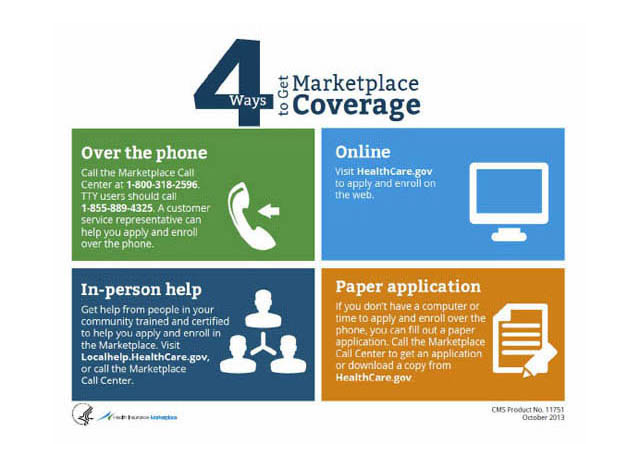
If you need help selecting a plan for 2025, there are trained and certified individuals who can help you enroll in a Marketplace plan and are required to provide fair, impartial and accurate information. To set up a time to talk in-person, over the phone, or by email with one of these individuals, there is an online portal you can use to find one of these individuals in your area.

Sometimes individuals and families are interested in changing insurance providers because they feel they have been treated unfairly by their current insurance provider. Open enrollment is the best time to make that change. Ohio law also gives you the right to file a complaint against insurance companies, health maintenance organizations (HMOs), insurance agents and adjusters. You can view more information about filing a complaint, and the Ohio agency in charge of protecting consumers from unlawful health insurance practices at insurance.ohio.gov

Ohio Medicaid Recipients

Please note that if you are an Ohio Medicaid recipient the deadlines listed in this article do not directly apply to you. While you must fill out a new Medicaid application every year to stay in the Medicaid program, the timing of this does not correspond to the open enrollment period of private insurance marketplace. If you have a current Ohio Medicaid provider the Ohio Department of Job and Family services, or your local county office, will contact you when it is time for re-determination of your eligibility. As an Ohio Medicaid recipient, you do still have a choice of which Medicaid provider you use, and may switch your coverage during the open enrollment period by contacting the provider to which you wish to switch. No action is needed if you wish to stay with your current Ohio Medicaid provider. The following is a list of Medicaid providers from which you may choose in the State of Ohio.

AMERIHEALTH CARITAS OHIO via website, or by phone at (833) 764-7700;

ANTHEM BLUE CROSS AND BLUE SHIELD via website, or by phone at (844)912-0938; the

BUCKEYE HEALTH PLAN via website, or by phone at (866) 246-4358;

HUMANA HEALTHY HORIZONS IN OHIO via website, or by phone at (877) 856-5702;

MOLINA HEALTHCARE OF OHIO via website, or by phone at (800) 642-4168;

UNITED HEALTHCARE COMMUNITY PLAN OF OHIO via website, or by phone at (800) 895-2017; or the

CARESOURCE via website, or by phone at (800-324-8680).

You can find more resources related to primary health care by selecting the “Primary Medical Care” category tab on our Social Service “Utilization Library” page.

-AMAZONPOLLY-ONLYAUDIO-START- You can find links to the resources mentioned in this episode with the written version of this story on our website at social service news, dot, org. You’ve been listening to the Social Service News Network, now available as a podcast on Amazon Music, Audible, Apple Podcasts & iTunes, YouTube, and Spotify. If you have social service news to submit to this podcast, visit social service news dot org. Once there you can also subscribe to get a free summary of the past week’s social service news stories emailed to you every Monday morning. So subscribe to our e-newsletter and podcast, and visit us online to discover more social service news and resources. -AMAZONPOLLY-ONLYAUDIO-END-
Healthcare Marketplace Re-Enrollment Deadlines Approaching

If you had Marketplace health insurance in 2025, you can renew, change, or update your plan for 2025 until January 15, 2026. If you want your coverage to start by January 1st, 2026, then you must enroll by December 15th. Doing nothing will automatically re-enroll you in the program you are in, or a similar program if your program is no longer available for the same coverage and price.

Automatic enrollment is a good fallback. But the best way to make sure you have a 2026 plan that works for you, with the savings you qualify for, is to log in, update your application, and view all your plan options for 2026.

If you are applying for the first time, the same deadlines apply. The process is a little different in this case, however, in that you will need to create an account at marketplace.gov, whereas others are simply logging into their existing account. Either way, if you would like assistance from an agent or broker, or want to enroll through one of the Healthcare.gov certified enrollment partners, help is available. You can also enroll over the phone, 24 hours a day, 7 days a week, excluding holidays. Representatives at the marketplace.gov call center will help you fill out an application, review your choices and enroll, completely over the phone. Their number is 1-800-318-2596, or for TTY: 1-855-889-4325.

You can find more resources related to private insurance coverage by selecting the “medicaid & medicare” and/or “private insurance” option from the dropdown tab on our Social Service “Utilization Library” page.